
Sesbania longifolia
Sesbania longifolia
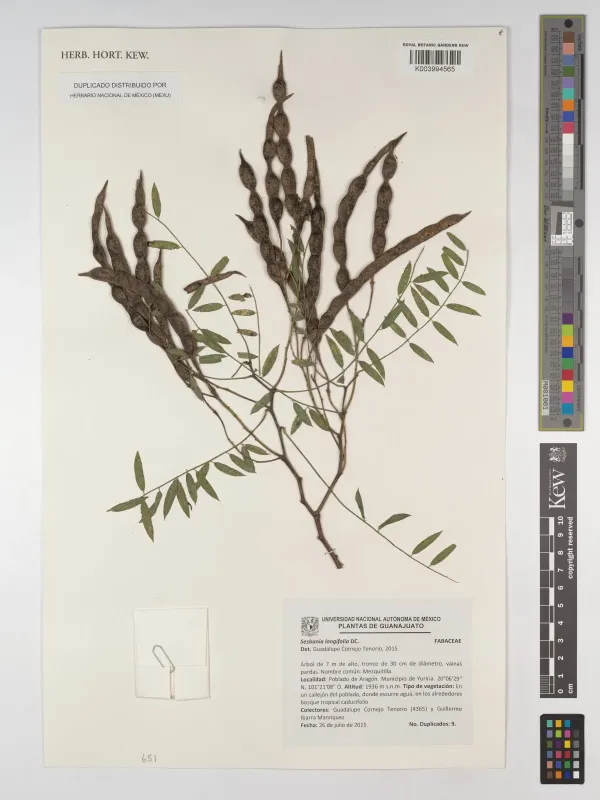
Description
Sowing dates
Sesbania longifolia is a heat-loving plant, and therefore sowing should only be carried out once stable warm weather has been established.
The optimal time for field operations is when the soil temperature at the seeding depth reaches 18–20 degrees Celsius.
In regions with short growing seasons, it is recommended to sow the seeds immediately after the risk of late spring frosts has passed.
The seeding rate is calculated based on the intended purpose, as biomass production requires a higher planting density than seed multiplication.
The sowing depth is usually 2–3 centimeters, depending on the structure and moisture content of the topsoil layer.
Growing requirements
This legume crop demonstrates high adaptability to various soil types, including saline and waterlogged environments.
Sesbania longifolia prefers sunny locations, as it is a light-demanding plant sensitive to significant shading during its growth cycle.
The plant handles temporary flooding well, making it a promising candidate for cultivation in low-lying areas or zones with excessive moisture.
The optimal pH range for robust root system development and symbiosis with nitrogen-fixing bacteria is slightly acidic to neutral.
During the active growth phase, the crop requires adequate moisture, although mature plants can withstand short periods of drought.
Yield
The green biomass yield of Sesbania longifolia depends directly on soil fertility levels and the quality of agronomic management.
Under favorable conditions, the crop can generate a substantial volume of vegetative mass rich in nitrogen and organic matter.
Economic use of Sesbania is often directed toward producing valuable green manure, which significantly improves soil structure.
Seed harvesting requires careful attention to the ripening phase, as pods can crack and shatter if allowed to dry out excessively.
The use of the plant as a feed supplement is limited due to the necessity of monitoring anti-nutritional compounds present in the plant tissues.
Main diseases and pests
The primary pests affecting Sesbania are various insect species that typically target legumes, including weevils and aphids.
Root system diseases often arise from improper drainage or excessive compaction of the upper soil horizons.
Leaf spots and other fungal infections may develop under conditions of prolonged rain and high humidity during the active vegetation stage.
Disease prevention includes strict adherence to crop rotation cycles and the use of high-quality, treated seed materials before planting.
Effective crop protection requires regular field monitoring to detect harmful organisms and implement timely control measures.
Harvesting
Harvesting for green manure is conducted during the full flowering phase, when nitrogen accumulation in the plant tissues reaches its peak.
Timely incorporation of biomass into the soil facilitates rapid decomposition of residues and enriches the soil with essential nutrients for subsequent crops.
For seed harvesting, combine harvesters are used with appropriate settings for the threshing unit to prevent mechanical damage to the seeds.
After harvesting the seeds, the remaining plant residues can be used as mulch or processed to extract plant fibers.
Proper management of the harvest cycle minimizes losses and ensures the production of quality seed stock for the following season.