
Sesbania grandiflora
Sesbania grandiflora
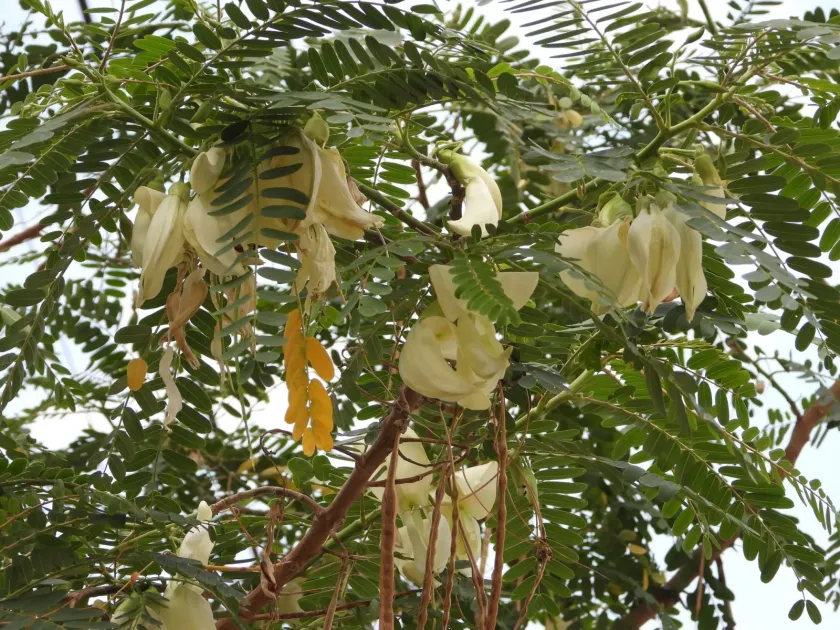
Description
Sowing dates
Sesbania grandiflora, commonly known as the vegetable hummingbird, is a fast-growing, short-lived tree in the Fabaceae family, native to Southeast Asia and widely cultivated in tropical regions.
Sowing is typically conducted at the onset of the rainy season to provide the seedlings with sufficient moisture for initial establishment. In tropical climates, this ensures rapid germination and early growth.
Seeds are often pre-treated by scarification or soaking in warm water for several hours to break dormancy caused by their hard seed coats, significantly improving germination percentages.
Direct seeding in the field is common, with seeds placed at a depth of 2 to 3 centimeters. Planting density is adjusted based on the objective, whether it be biomass production or timber harvest.
The plant exhibits exceptional growth vigor, often reaching several meters in its first year, which makes it highly effective for reforestation and weed suppression in agroforestry systems.
Growing requirements
This species thrives in hot, humid tropical climates and is highly sensitive to frost, which limits its commercial cultivation to frost-free zones with temperatures consistently above 22°C.
Sesbania is highly adaptable to various soil types, ranging from sandy loams to heavy clays, and demonstrates remarkable tolerance to saline and waterlogged soil conditions.
A significant biological feature is the plant's ability to fix atmospheric nitrogen through a symbiotic relationship with Rhizobium bacteria, which naturally enhances soil fertility.
The tree is photophilous and requires full sun exposure to reach its maximum productivity. In dense stands, proper spacing or periodic thinning is essential to maintain airflow and light penetration.
While drought-tolerant once established, young plants require supplemental irrigation during the dry season to prevent moisture stress and ensure the development of a healthy root system.
Yield
Sesbania grandiflora is a multipurpose crop with significant value in agriculture, providing nutritious food, animal fodder, timber, and green manure for soil improvement.
The leaves, tender flowers, and immature seed pods are edible and serve as a staple vegetable in many Asian diets, being rich in vitamins, minerals, and high-quality vegetable protein.
Livestock producers highly value Sesbania as a protein-rich fodder source. Its ability to regrow rapidly after pruning allows for multiple harvests of leaves and twigs throughout the year.
The wood is lightweight, soft, and suitable for making pulp for the paper industry, as well as for light construction, tool handles, and as a source of clean-burning fuelwood.
As a green manure crop, it is incorporated into the soil during its vegetative phase to provide a significant pulse of organic matter and nitrogen, boosting the performance of following crops.
Main diseases and pests
The plant can be susceptible to various insect pests, including aphids and leaf-eating beetles, which may cause defoliation and hinder the growth of young trees during dry spells.
Root rot caused by fungal pathogens such as Fusarium can occur in poorly drained soils, making site selection and management of soil drainage critical for plantation health.
Nematode infestations can damage roots and interfere with nitrogen fixation efficiency, requiring vigilance and the use of resistant varieties or proper crop rotation cycles.
Biological pest control methods, such as encouraging beneficial insects or applying neem-based formulations, are preferred to maintain the ecological balance of the plantation.
Regular monitoring and prompt removal of dead or heavily infested branches help minimize the spread of pathogens, ensuring the long-term sustainability of the agroforestry project.