
Senna septemtrionalis
Senna septemtrionalis
Description
Growing requirements
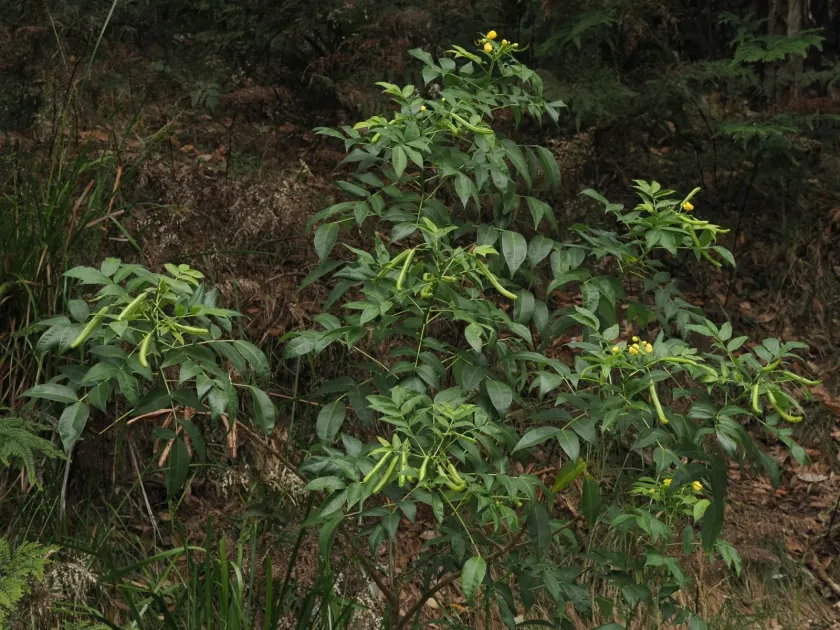
Senna septemtrionalis, commonly known as the smooth senna, belongs to the Fabaceae family. It is a vigorous, evergreen shrub characterized by its pinnate leaves and vibrant yellow floral displays throughout the growing season.
Native to Mexico and Central America, this species has been introduced to various tropical and subtropical regions globally. It is frequently utilized in reforestation projects and as a versatile landscape element due to its hardiness.
This crop thrives in well-draining, nutrient-rich soils. While it can adapt to various soil types, maintaining a slightly acidic to neutral pH is ideal for optimal nutrient uptake and general plant health.
Sunlight exposure is crucial for Senna septemtrionalis; the plant requires full sun to partial shade conditions to flourish. Insufficient light often leads to leggy growth and significantly reduced flower production.
Water requirements vary based on the growth stage; young plants need consistent moisture, whereas established shrubs demonstrate moderate drought tolerance. Mulching around the base helps retain soil moisture during peak summer months.
Main diseases and pests
Aphids are the most common pest observed on Senna septemtrionalis, typically clustering on tender new growth. Biological control or insecticidal soap applications are usually effective in managing these infestations.
Fungal leaf spot diseases may develop if foliage remains wet for extended periods. Pruning the inner branches to improve airflow is a fundamental cultural practice to prevent the proliferation of spores.
Root rot caused by Phytophthora or Pythium species is a severe risk in poorly drained sites. Ensuring the planting site has excellent percolation prevents the formation of anaerobic conditions in the soil.
Spider mites can become problematic during hot and arid weather conditions. Regular monitoring and overhead misting can discourage mite colonization on the underside of the leaflets.
Nutrient deficiencies, specifically nitrogen or magnesium, can cause chlorosis. Implementing a balanced fertilization program ensures the plant maintains its deep green foliage and vigorous growth rate.