
Senna floribunda
Senna floribunda
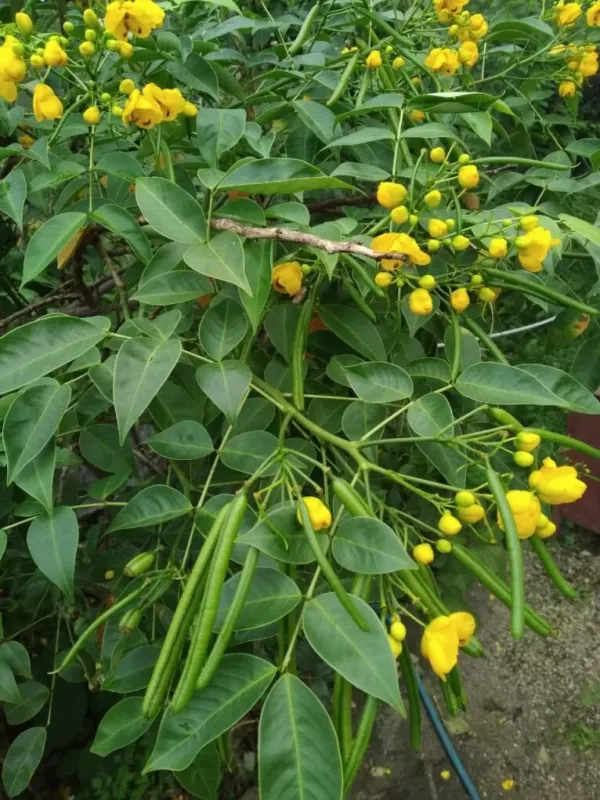
Description
Sowing dates
Senna floribunda belongs to the Fabaceae family. For successful cultivation, seeds often require scarification of the outer coat to improve water absorption and ensure uniform germination.
Planting should be timed for the start of the warm season or the beginning of the rainy season. Seeds are typically sown at a depth of 1 to 2 centimeters in well-prepared, loose soil beds.
Optimal germination occurs at soil temperatures between 20°C and 25°C. When planting on a commercial scale, spacing should be maintained at 60 to 90 centimeters between rows to allow for healthy development.
Seedlings usually emerge within two weeks. During the early stages, it is vital to keep the soil consistently moist but never waterlogged to prevent the delicate root system from suffocating or rotting.
Young plants benefit from nitrogen-rich fertilization, although, as with many legumes, the plant develops its own capacity to fix atmospheric nitrogen once established in the soil.
Growing requirements
Originating from the tropical regions of the Americas, Senna floribunda is highly sensitive to cold. It thrives only in frost-free climates and requires protection if grown in regions with cooler seasonal temperatures.
Full sun exposure is necessary for this species to achieve its signature abundant flowering. Insufficient light results in leggy growth and significantly reduces the biomass yield of the plant.
The plant prefers well-drained, sandy loam or loamy soils with a neutral pH. It is particularly sensitive to stagnant water, so site selection should prioritize locations with excellent natural drainage.
Regular irrigation is required during the vegetative phase. While mature shrubs show some tolerance to short periods of drought, consistent moisture is essential for maximum leaf and flower production.
Pruning is a critical aspect of management. Regular trimming encourages a bushier structure, prevents the plant from becoming too woody, and promotes the growth of fresh, productive branches.
Yield
The primary economic output of Senna floribunda includes the leaves and fruits, which are utilized for their specific medicinal compounds. Harvesting is typically executed at the peak of the flowering period.
Yield capacity is strongly correlated with agricultural inputs and management. With proper pruning and nutrient application, growers can optimize the production of foliage throughout the growing season.
Post-harvest processing involves drying the foliage at controlled temperatures, usually not exceeding 50°C, to preserve the stability of the active pharmacological components within the leaf tissues.
In landscaping and ornamental settings, yield is measured by the longevity and density of the floral display. A healthy, well-nourished plant can bloom continuously for several months in favorable conditions.
Seed harvesting should be carefully monitored. Collecting seeds from the most vigorous plants ensures a high-quality genetic foundation for subsequent planting cycles in the next season.
Main diseases and pests
Aphids are the most common pests, often clustering on the soft, new growth at the tips of the branches. They sap plant vigor and can transmit viral diseases if left unchecked over long periods.
Fungal issues such as leaf spot and powdery mildew are prevalent in high-humidity conditions or areas with poor air circulation. Proper spacing between rows is the best preventative strategy.
Root rot occurs in heavy or poorly drained soils. Symptoms include sudden wilting of the foliage and discoloration of the stem base, often leading to the rapid death of the entire plant.
Spider mites can become a nuisance during hot, dry weather. They cause stippling on the leaves, leading to yellowing and premature leaf drop, which directly impacts the overall plant health.
Integrated Pest Management (IPM) practices, including the use of neem-based insecticides or predatory insects, are recommended to control populations without leaving harmful residues on medicinal foliage.
Harvesting
Manual harvesting of leaves is the standard procedure to ensure product quality and avoid contamination. It should be performed in the morning after the dew has evaporated from the leaves.
Pods should be harvested when they are fully mature and have turned brown. Timing is crucial to prevent the pods from bursting naturally on the branch and scattering the seeds on the ground.
Processing equipment must be kept clean to maintain the standards required for raw botanical materials. The harvested product should be stored in cool, dry conditions away from direct sunlight.
Grading of the harvest is essential for commercial purposes. Separating leaves from woody stems ensures a more potent and uniform product, meeting the requirements of industrial buyers.
Proper storage in well-ventilated, moisture-proof containers prevents the development of mold, which is the most common cause of spoilage for dried legume-based agricultural products.