
Semiramisia speciosa
Semiramisia speciosa
Description
Growing requirements
Semiramisia speciosa is a distinctive species of flowering shrub belonging to the Ericaceae family, widely recognized for its beautiful, tubular blooms. It is native to the high-altitude, humid montane cloud forests of South America, specifically in regions across Colombia and Ecuador.
In terms of climate, the species thrives in cool, misty environments with very high atmospheric humidity. It is not suitable for extreme heat or arid conditions, as its physiological adaptations are fine-tuned to the constant moisture and moderate temperatures of its native high-elevation habitats.
For cultivation purposes, the soil medium must be highly specific, favoring an acidic pH and an airy, organic-rich structure. Gardeners often use substrates similar to those used for epiphytic orchids, such as a mix of peat moss, pine bark, perlite, and decomposed organic matter.
Proper water management is essential for the health of the plant. While it requires high humidity, the roots are susceptible to rot if they remain waterlogged. Therefore, excellent drainage must be prioritized in all planting containers to ensure oxygen reaches the root system effectively.
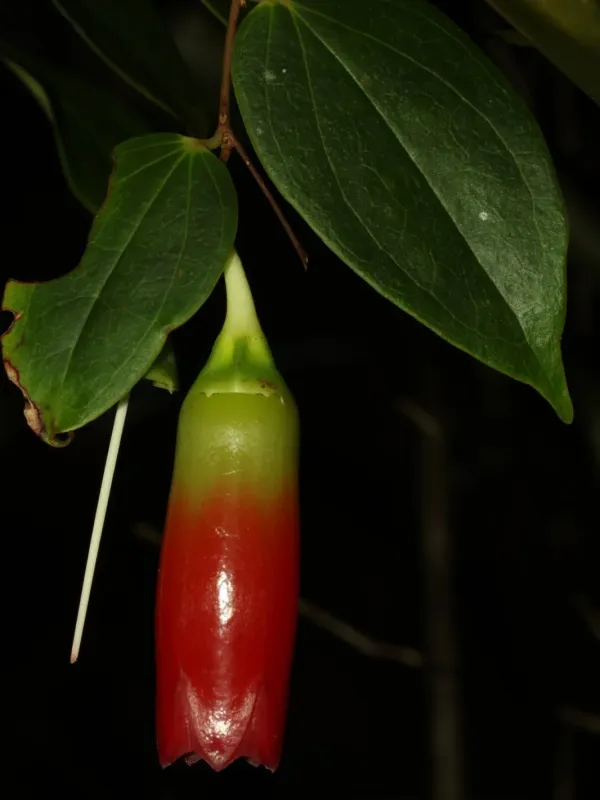
Botanically, the plant is characterized by its coriaceous (leathery) leaves and pendulous, vibrant flowers that appear in clusters. These features allow the plant to withstand the challenging conditions of the mountain forest canopy, making it a prized specimen for collectors of tropical exotics.