
Seddera latifolia
Seddera latifolia
Description
Growing requirements
Seddera latifolia is a perennial plant belonging to the Convolvulaceae family. Known for its remarkable resilience, this species thrives in harsh, arid environments where other vegetation often fails to survive, playing a vital role in local ecosystems.
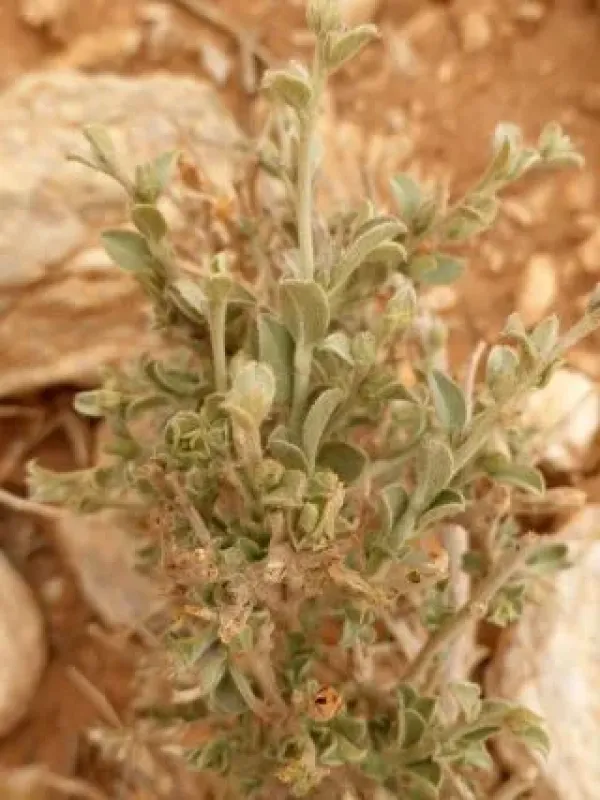
The botanical profile of the plant includes broad, pubescent leaves designed to mitigate water loss through transpiration, and a hardy root system that reaches deep into the soil. These adaptive features allow the plant to maintain growth during prolonged droughts.
Geographically, its distribution is concentrated in arid and semi-arid regions of Africa and parts of the Middle East. It is widely recognized as a plant species that can withstand extreme temperature fluctuations and high levels of solar radiation.
The crop thrives in well-drained, sandy or gravelly soils. It does not require high-fertility soil, showing a notable tolerance for low-nutrient substrates, which makes it suitable for ecological restoration in degraded arid landscapes.
Economically, Seddera latifolia is utilized primarily as forage for livestock, particularly in pastoral systems. Its ability to provide green biomass during the dry season makes it an essential fodder resource for camels, goats, and sheep in desert climates.