
Scorodocarpus borneensis
Scorodocarpus borneensis
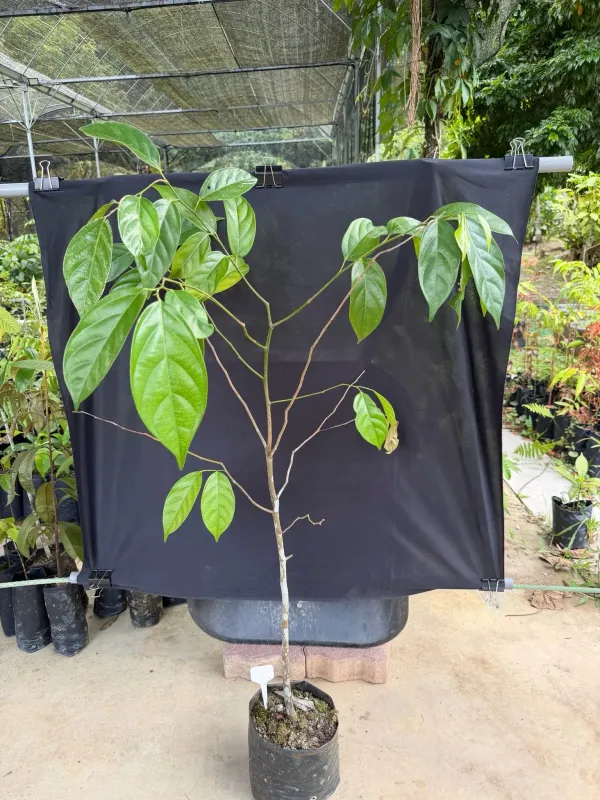
Description
Growing requirements
Scorodocarpus borneensis, commonly known as the garlic wood tree, is a prominent member of the Olacaceae family. It is a large, evergreen, forest-canopy tree that can reach significant heights in its native habitat.
The species is indigenous to the tropical rainforests of Southeast Asia, specifically spanning across Borneo, Sumatra, and the Malay Peninsula. It thrives in humid, lowland rainforest conditions with consistent annual rainfall.
Botanically, the tree is distinct due to the potent sulfurous aroma, reminiscent of garlic, which permeates its leaves, bark, and seeds. This characteristic serves as a natural deterrent against certain herbivores.
Agronomic requirements are focused on maintaining high soil humidity and avoiding exposure to direct sunlight for young seedlings. The tree requires fertile, well-drained soil rich in organic matter to reach its full development potential.
In terms of хозяйственного usage, the seeds are gathered for consumption, and the timber is highly valued in regional markets for its density, durability, and resistance to fungal decay and insect attacks.
Main diseases and pests
The primary threat to Scorodocarpus borneensis is habitat loss caused by large-scale deforestation and the conversion of primary forest lands into industrial plantations.
Pests and diseases are not extensively documented in a commercial context; however, stem borers are known to cause structural damage to trunks, reducing timber quality.
Fungal pathogens can colonize the tree during periods of extreme water stress or when the root system is disturbed by surrounding soil erosion or flooding.
Anthropogenic disturbances, such as the fragmentation of forest corridors, impede the natural seed dispersal mechanisms essential for the long-term survival of the species.
Lack of specialized propagation techniques remains a bottleneck for the sustainable cultivation of this tree, making it vulnerable to over-exploitation in the wild.