
Common rivergrass
Scolochloa festucacea
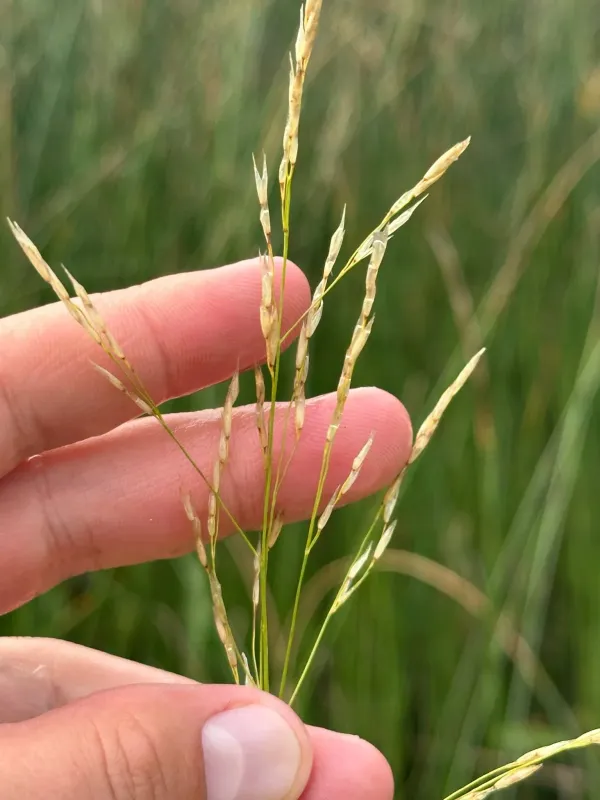
Description
Growing requirements
Common rivergrass (Scolochloa festucacea) is a robust perennial grass belonging to the Poaceae family. It is predominantly found in temperate regions of the Northern Hemisphere, where it thrives in wetlands, marshes, and river floodplains that experience seasonal flooding.
The plant is biologically specialized for aquatic and semi-aquatic environments. It possesses an extensive rhizome system that allows it to survive prolonged submersion, making it a key species for stabilizing water-logged soils where conventional forage crops would fail to establish.
The stems of the common rivergrass can reach heights of 1 to 1.5 meters. Due to its rapid biomass production, it serves as a significant source of vegetation in flooded meadows. Its leaves are broad and productive, contributing to high yields of green matter during the growing season.
Soil requirements for this grass are centered around moisture availability. It performs best on rich, mucky, or alluvial soils that remain wet throughout the growing period. It shows impressive tolerance to varying pH levels and can even endure slightly saline environments, which is rare for many wetland grasses.
From an agricultural perspective, the species is valued for its hardiness. While not typically planted as a commercial seed crop like wheat or maize, it is a vital wild hay resource for livestock grazing in regions where better drainage is not feasible.
Harvesting
Harvesting common rivergrass is highly dependent on the water level of the site. The ideal time for cutting is just before or at the early flowering stage to ensure the highest nutritional value. At this stage, the protein content is sufficient to support cattle and other ruminants during winter.
Equipment for harvesting must be lightweight or equipped with specialized flotation tires to maneuver through wet, soft terrains. Once cut, the grass requires a drying period, often in windrows, to reduce moisture content before it can be baled or stacked for storage.
Proper management of the harvest cycle is critical to prevent the grass from becoming too stemmy. If left to mature fully, the plants develop high concentrations of lignin, which significantly lowers palatability and digestibility for livestock.
After the harvest, the root systems are generally vigorous enough to support regrowth, provided that the water regime remains favorable. Sustainable management involves leaving enough biomass to ensure the plant's survival and vigor for the following growing season.
In addition to its role as hay, rivergrass is increasingly recognized for its potential in phytoremediation and soil stabilization. By preventing erosion along irrigation canals and riverbanks, it performs an essential ecosystem service while providing an annual biomass harvest.