
Schoutenia accrescens
Schoutenia accrescens
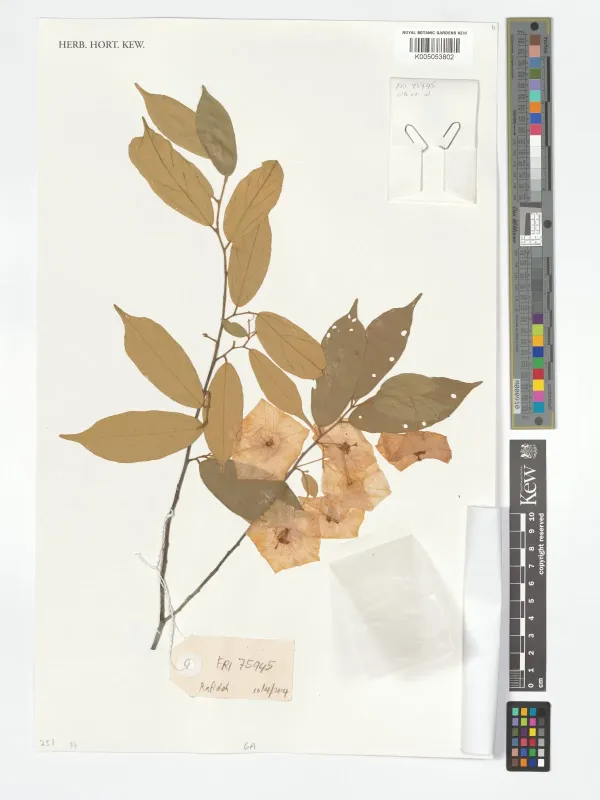
Description
Growing requirements
Schoutenia accrescens is a significant tropical tree species belonging to the Malvaceae family. Native to the humid rainforests of Southeast Asia, particularly in Malaysia and Indonesia, it is adapted to the complex environmental conditions of the tropical belt.
The plant thrives in regions with consistently high humidity and annual temperatures typically ranging between 24 and 30 degrees Celsius. It is primarily found in lowland forests where it forms part of the dense forest canopy, relying on stable climatic conditions for optimal growth.
Regarding soil requirements, the species performs best in deep, well-drained alluvial soils that are rich in organic matter. While it prefers moist conditions, it requires good drainage to ensure healthy root development, as waterlogged soil can lead to physiological stress.
Cultivation practices involve selecting sites that mimic the natural forest floor environment. In forestry projects, establishing initial canopy cover helps shade the saplings, protecting them from excessive direct sunlight and wind during their most vulnerable growth stages.
The species exhibits unique botanical traits, such as its characteristic leaves and flowers, which are typical of the Malvaceae family. Its ability to compete for resources in diverse tropical settings makes it a candidate for reforestation efforts aimed at restoring native flora.
Harvesting
The primary economic utilization of Schoutenia accrescens is based on its valuable timber. The wood is renowned for its strength, hardness, and durability, making it suitable for high-end construction and furniture production.
Harvesting operations are managed through sustainable silvicultural practices to ensure long-term availability of the timber resource. The processing of the harvested wood typically involves controlled kiln drying to maintain structural integrity and prevent natural warping.