
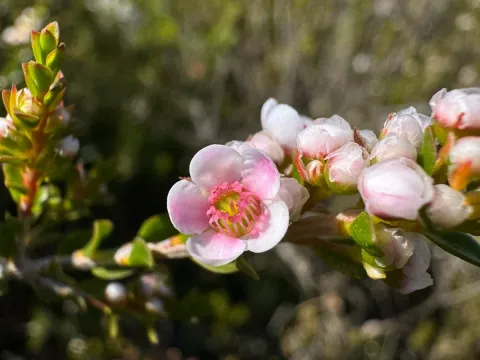
Scholtzia
Scholtzia
Scholtzia is a genus of evergreen shrubs belonging to the Myrtaceae family. These plants are native to the southwestern region of Western Australia, where they thrive in specific Mediterranean-type climatic conditions.
What the section contains

Scholtzia
The botanical structure of Scholtzia includes small, opposite, often aromatic leaves and distinctive five-petaled flowers with numerous stamens. The plants are recognized for their profuse flowering which creates a dense display on the branches.
Regarding soil requirements, Scholtzia demands excellent drainage and grows best in sandy or gravelly soil types. They are highly intolerant to heavy, waterlogged clay soils which restrict root respiration.
Climate and environmental needs involve high levels of sunlight and a well-ventilated location. They are adapted to dry, hot summers and are susceptible to frost and excessive atmospheric humidity in cooler climates.
In terms of horticultural use, Scholtzia is primarily valued as an ornamental shrub in gardens. Additionally, it has gained popularity in the floral industry due to the long vase life of its flowering stems, which are used as high-quality greenery and filler.
The primary threats to Scholtzia cultivation are related to fungal pathogens, particularly root rot caused by Phytophthora species. These diseases are triggered by excessive moisture and poor drainage in the potting or garden soil.
Pests such as spider mites and mealybugs may occur, especially in greenhouse environments where air circulation is limited or when humidity levels are not properly managed.
Cultural prevention of disease involves maintaining a strict irrigation schedule that allows the root zone to dry out sufficiently between waterings, preventing the onset of anaerobic conditions.
Integrated pest management is recommended to maintain the aesthetic quality of the foliage. Regular monitoring of the underside of leaves and stems is essential for early detection of any infestations.
Chemical control, if necessary, should be applied with caution, utilizing fungicides or insecticides that are compatible with Myrtaceae species to ensure no phytotoxicity occurs on the delicate flowers.