
Schoepfia schreberi
Schoepfia schreberi
Description
Growing requirements
Schoepfia schreberi is a woody shrub that belongs to the Schoepfiaceae family. While previously classified under Olacaceae, current botanical research places it in its own distinct family due to specific morphological and genetic traits.
Originating from the tropical and subtropical regions of the Americas, this plant is found in Florida, Mexico, the Caribbean, and northern South America. It typically grows in woodland habitats, often choosing limestone-based soils where it thrives as a hemiparasitic species.
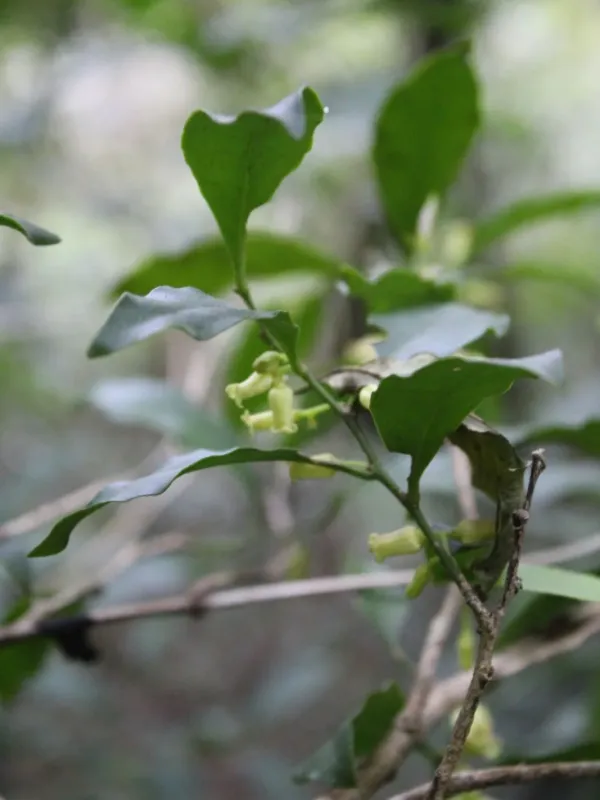
The botanical profile includes stiff, leathery leaves and small, tubular, yellow-to-orange flowers. Its fruit is a drupe, turning from a soft green to a vibrant red color upon maturity, which is a key identifying characteristic of the species in the wild.
Cultivation requirements are strict regarding climate; the plant demands a frost-free environment and significant solar exposure. It prefers well-drained, slightly alkaline soils, reflecting its natural preference for limestone outcrops in its native habitat.
Economic use of the plant remains largely local and traditional. The fruits are occasionally foraged for consumption, and the plant is studied in ethnobotany for potential medicinal properties contained in its leaves and bark, though large-scale agricultural production is currently non-existent.
Main diseases and pests
The primary threat to Schoepfia schreberi populations is the loss of natural habitat through deforestation and urban development. Under controlled conditions, the plant is susceptible to root rot, which occurs if the soil drainage is inadequate or water remains stagnant.
Common pests include scale insects and spider mites, which can infest the foliage in greenhouse settings. Regular monitoring of the leaf underside is recommended to detect these pests early before they cause significant damage to the shrub's health.
Fungal leaf spot diseases can emerge in high-humidity conditions with insufficient airflow. Maintaining a well-ventilated space and avoiding overhead watering are critical cultural practices to mitigate these types of infections during the growth cycle.
Since it is a hemiparasite, the health of the plant is intrinsically linked to the health of its host species. If the host plant is stressed by pests or diseases, the Schoepfia schreberi will inevitably show signs of decline, necessitating a holistic approach to plantation management.
Management of diseases is currently limited to sanitary pruning and environmental control. There are no specialized chemical pesticide protocols established for this specific species, so organic and preventive measures are the standard practice for enthusiasts and researchers alike.