
Schivereckia podolica
Schivereckia podolica
Description
Growing requirements
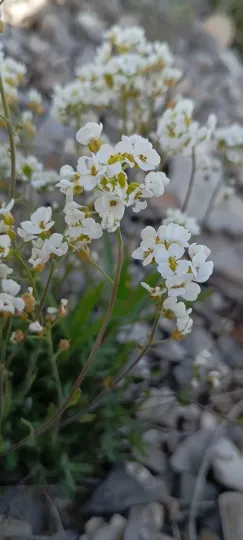
Schivereckia podolica is a perennial herbaceous plant belonging to the Brassicaceae family. It is recognized as a unique petrophyte, specialized in colonizing rocky outcrops and calcareous substrates in its native range.
The plant is native to Eastern Europe, particularly concentrated in regions along the Dniester and Southern Bug rivers. It thrives in open, sunny locations with high light intensity and limited competition from other plant species.
Morphologically, the plant features a basal rosette and slender, pubescent stems that help reduce transpiration. These adaptations allow the plant to withstand arid conditions and temperature fluctuations typical of its cliffside habitat.
Cultivation requirements involve simulating extreme, nutrient-poor conditions. The soil must be highly permeable, alkaline, and rocky. Overwatering and heavy fertilization are detrimental, often leading to rapid root rot and plant death.
In gardening, this species is mainly utilized in rock gardens where it can be grown in mineral-rich, well-draining substrates. It requires minimal maintenance, focusing on ensuring sufficient light and avoiding waterlogging of the roots.
Main diseases and pests
The primary threats to this species are habitat loss due to quarrying, infrastructure development, and agricultural encroachment. The loss of stable, exposed rock surfaces significantly impacts its survival chances.
Natural ecological succession presents another challenge. As nearby vegetation encroaches upon its rocky habitats, the increase in shade and competition for space leads to a decline in population density.
Pests and diseases are not significant in the wild but can become an issue in domestic cultivation. Crucifer-feeding insects may target young plants, requiring careful observation during the early vegetative stage.
Erosion and soil instability on steep slopes where the species grows can lead to the displacement of individuals. Furthermore, invasive plant species often compete with Schivereckia for water and micronutrients.
Conservation efforts are strictly governed by regional environmental regulations. Protecting existing sites from human activity and monitoring population numbers are essential steps to ensure the survival of the species in the wild.