
Mongongo
Schinziophyton rautanenii
Description
Growing requirements
Mongongo (Schinziophyton rautanenii) belongs to the Euphorbiaceae family. It is a large deciduous tree native to southern Africa, playing a vital role in the Kalahari Desert ecosystems.
The crop thrives in well-drained sandy soils. These trees are highly drought-tolerant and capable of growing in regions with annual rainfall between 200 and 600 mm, efficiently storing moisture in their massive trunks.
Optimal growth conditions include a distinct dry season, which promotes fruit ripening. The plant is photophilous and cannot tolerate shading in its early years, requiring open spaces with excellent sunlight exposure.
From an agronomic perspective, Mongongo is primarily a wild species, but research into its domestication is ongoing. Propagation via seeds requires pre-stratification or mechanical scarification of the hard shell to improve germination rates.
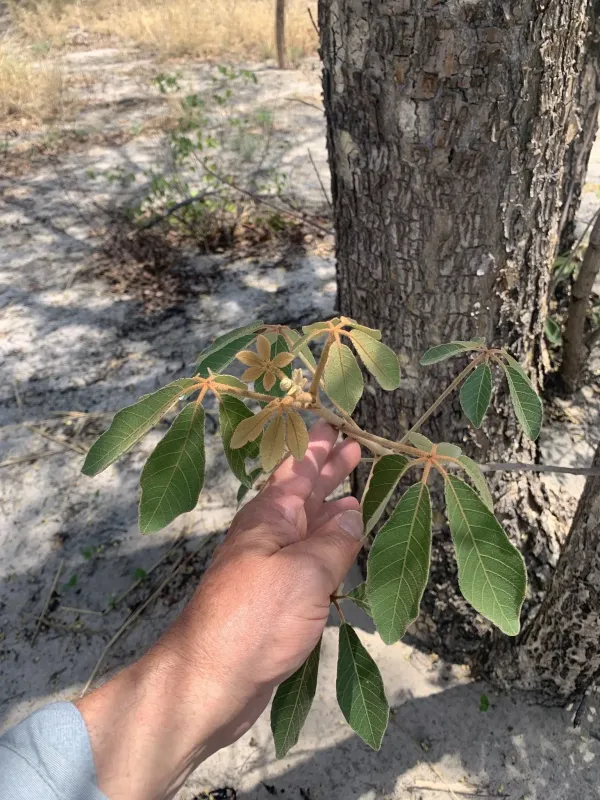
The tree reaches a height of up to 15-20 meters and features a wide, spreading canopy. Its palmate-compound leaves allow the plant to efficiently utilize solar energy even under harsh African climate conditions.
Yield
Economic use of Mongongo focuses on harvesting fruits that contain nutritious nuts. The Mongongo nut, hidden under the flesh, is a primary source of valuable culinary and cosmetic oil.
The nut kernel contains 50-60% fats and significant amounts of plant protein. It is traditionally used by local communities as a staple food source due to its high caloric content and long shelf life.
Mongongo oil is highly prized in the cosmetic industry for its high vitamin E and essential fatty acid content. It provides excellent moisturizing and protective properties, making it a sought-after export product.
Mongongo wood is exceptionally light, yet strong and resistant to decay. Due to its porous structure, it is frequently used for making floats, surfboards, and lightweight building constructions.
Yields from wild stands can vary, but with proper population management, a single tree can produce significant volumes of fruit annually, providing a sustainable income for local farming communities.
Main diseases and pests
The primary threats to Mongongo are forest fires, which can damage young specimens. Despite the thick bark of mature trees, systematic fire exposure reduces the overall viability of the stands.
Pests such as weevils can damage seeds, reducing their germination and commercial value. Monitoring insect populations is a critical part of agronomic control in active harvesting zones.
The crop exhibits relative resistance to fungal diseases in its natural environment; however, risks of root rot may occur in overly dense plantations. Strict control of soil moisture levels is necessary to prevent such pathologies.
Anthropogenic factors remain a major threat, as overexploitation of resources and deforestation for land clearing disrupt the natural regeneration of this slow-growing culture.
To preserve the species' potential, agronomists recommend implementing agroforestry methods, combining Mongongo with other sustainable plant species to maintain biological balance in its habitat.