
Scheuchzeria palustris
Scheuchzeria palustris
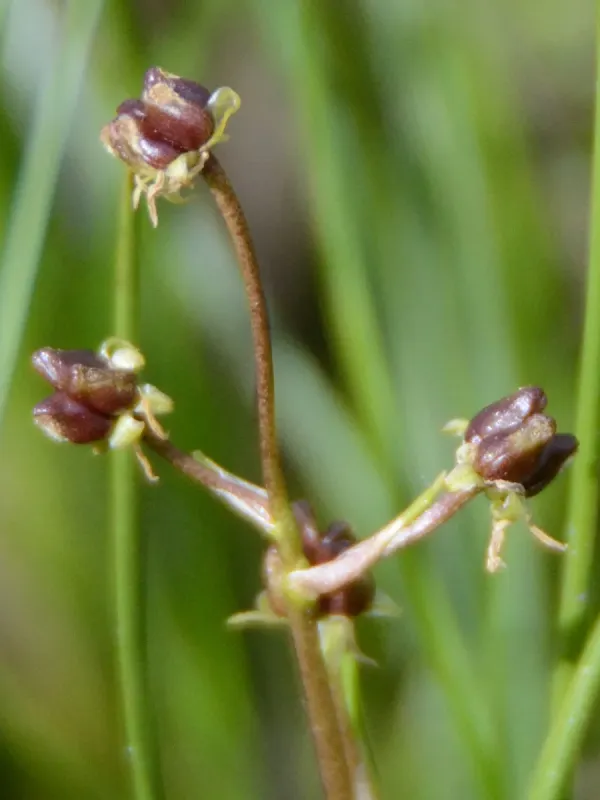
Description
Growing requirements
Scheuchzeria palustris, commonly known as Rannoch-rush, is a unique perennial aquatic plant representing the monotypic family Scheuchzeriaceae. It is a highly specialized species adapted exclusively to peat-forming bogs and mire ecosystems.
The plant is characterized by a creeping rhizome and simple, linear leaves that thrive in saturated, acidic, and nutrient-poor soils. Its biology is deeply integrated with Sphagnum moss systems, where it plays a role in peat accumulation and substrate stability.
Geographically, it is distributed across circumboreal regions of the Northern Hemisphere. Its survival depends on high water tables and oligotrophic conditions, making it an excellent ecological indicator for healthy, undisturbed wetland habitats.
To cultivate this species, one must replicate the conditions of a raised bog, focusing on low mineral content and consistent saturation. It does not tolerate high nitrate levels or fluctuations in soil acidity, which can occur during improper management.
The agronomy of this plant is focused on ecological restoration and wetland management. Propagation is primarily vegetative, utilizing segments of the rhizome to ensure rapid establishment in suitable, water-logged soil conditions.
Main diseases and pests
The most significant threat to Scheuchzeria palustris is the drainage and reclamation of peatlands. When water tables fall, the specialized habitat is lost, and the species is quickly outcompeted by terrestrial flora that prefers drier ground.
Disease outbreaks in this plant are largely driven by environmental stress. Changes in water chemistry, such as eutrophication or industrial runoff, weaken the plants' immunity and make them susceptible to opportunistic fungal pathogens.
Pests are generally not a major factor in undisturbed bogs, but environmental disturbance can lead to localized damage. Maintaining the integrity of the moss layer is essential to protecting the sensitive root structures from physical damage and temperature spikes.
Climate change, specifically prolonged droughts, acts as a severe threat to the long-term survival of bog vegetation. The inability to move or adapt to dry conditions makes this species particularly vulnerable to shifting meteorological patterns.
Conservation efforts are critical for the survival of the species. Any human intervention in bogs where Scheuchzeria grows requires extensive monitoring to prevent irreversible damage to the hydrological regime of the area.