
Spiny burnet
Sarcopoterium spinosum
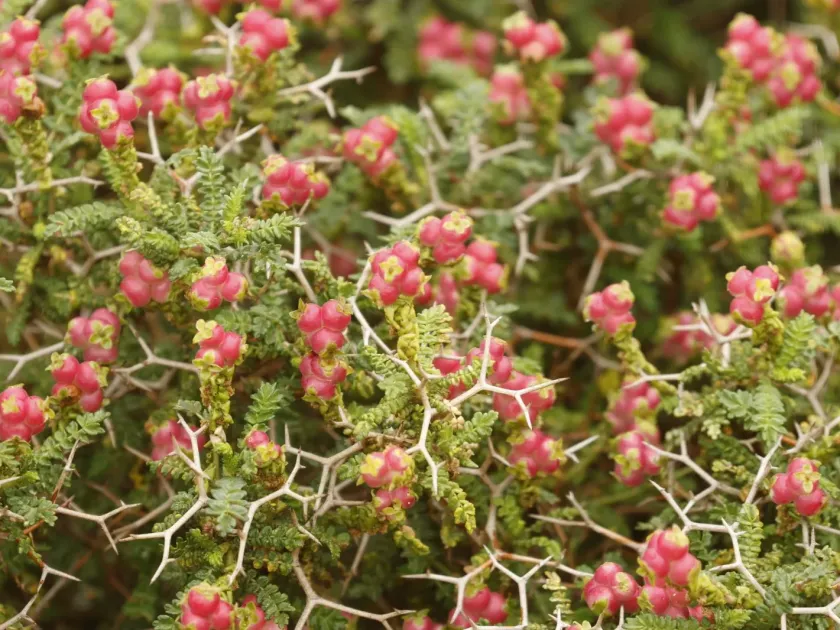
Description
Sowing dates
Spiny burnet (Sarcopoterium spinosum) is primarily propagated by seeds in its natural habitat. Sowing should be carried out in autumn or early spring when soil moisture is sufficient to support initial seed germination and seedling establishment.
To improve germination rates, seeds should undergo a period of cold stratification for several weeks. This simulates natural winter conditions, effectively breaking dormancy and promoting more uniform seedling emergence.
When cultivating in nurseries, seeds are sown into light, well-draining substrates. The sowing depth should be maintained at 1–2 centimeters to ensure adequate oxygen availability and optimal conditions for the delicate emerging sprouts.
Correct spacing is essential as the plant forms dense, cushion-like clusters. A spacing of 50–70 centimeters is recommended to ensure proper airflow through the canopy and to reduce humidity-related problems within the shrub.
Once true leaves appear, seedlings require moderate but consistent watering. Mature spiny burnet plants are exceptionally drought-tolerant and require minimal maintenance once they have fully adapted to their permanent growing location.
Growing requirements
Spiny burnet belongs to the Rosaceae family and is a key component of Mediterranean maquis and garrigue ecosystems. The crop is highly tolerant of poor, stony, and calcareous soils, thriving in conditions where many other plants struggle.
The plant exhibits strong xerophytic adaptations, allowing it to survive prolonged summer droughts. It prefers high-light environments, as shade results in elongated, weak stems and a significant decrease in the production of secondary plant metabolites.
Climate requirements include mild winters and hot summers. While the plant can withstand short periods of frost, it is sensitive to waterlogging, which can easily trigger root rot and other fatal physiological disorders in the root zone.
Successful cultivation requires excellent soil drainage. Heavy clay soils are unsuitable, as they prevent proper root aeration. In fields with drainage issues, raised beds or artificial mounds should be constructed to improve soil structure and water management.
In its natural habitat, spiny burnet acts as a soil stabilizer, preventing erosion on steep, rugged slopes. Its deep and extensive root system is capable of penetrating rock fractures, effectively anchoring the soil in place.
Yield
The commercial use of spiny burnet focuses on harvesting vegetative biomass and fruits, which contain high concentrations of bioactive compounds. Industrial harvesting is performed during the active growing season, prior to the lignification of stems.
Yield metrics are heavily dependent on the climatic conditions of the season. In years with adequate winter rainfall, the plant develops substantial green biomass suitable for subsequent extraction or pharmaceutical processing.
Harvesting is conducted manually or with specialized machinery, focusing on the sustainability of the individual shrubs. Proper pruning techniques not only yield biomass but also stimulate secondary branching for better harvests in future years.
In the pharmaceutical and cosmetic industries, both the aerial parts and roots are highly valued. Standardized harvesting protocols ensure that the raw material consistently meets the required levels of polyphenols and antioxidant compounds.
The efficiency of plantation-style cultivation depends on planting density and minimal management during the first year of growth. When best agronomic practices are followed, yields remain stable over an operational life of 10–15 years.
Main diseases and pests
Spiny burnet possesses a natural resistance to most plant diseases due to the presence of phytoncides and essential oils in its tissues. However, improper management, particularly high humidity, can lead to fungal infections.
Root rot, caused by pathogens like Pythium or Phytophthora, is the primary threat to plantation health. Prevention relies on selecting well-draining sites and strictly regulating irrigation to avoid saturation of the soil around the roots.
Pests rarely cause critical economic damage to these shrubs. Occasional outbreaks of aphids or spider mites can occur, particularly during hot and dry periods when the plants might experience temporary physiological stress.
Leaf-eating insect larvae may appear, but these are typically manageable and rarely cause mass defoliation. In organic farming, biological insecticides based on botanical extracts are used to control such outbreaks without resorting to harsh chemicals.
Monitoring remains the most important tool for defense. Regularly removing damaged branches and maintaining an optimal planting density are effective strategies for keeping the plantation healthy without chemical interventions.
Harvesting
The harvest of spiny burnet is timed to coincide with the budding or early flowering stage when the concentration of beneficial compounds is at its seasonal peak. This timing generally falls in the second half of spring.
Pruning shears are used for harvesting to ensure precise cuts without causing mechanical damage to the shrub's structure. It is essential to leave enough dormant buds on the plant to facilitate vigorous regrowth in the subsequent season.
Harvested material should be dried immediately in shaded, well-ventilated rooms or in dryers with precise temperature control below 40 degrees Celsius. Higher temperatures may cause the loss of volatile oils and sensitive biological compounds.
Once dried, the raw material is sorted to remove woody parts, thorns, and debris. The final product is stored in paper bags in dry, dark conditions to preserve quality and prevent degradation from light or moisture.
Roots are harvested in autumn during the plant's dormant phase. After thorough cleaning and washing to remove soil residues, they are air-dried to produce high-quality extracts for pharmaceutical and medicinal applications.