
Greasewood
Sarcobatus vermiculatus
Description
Growing requirements
Greasewood (Sarcobatus vermiculatus) is a perennial deciduous shrub belonging to the Sarcobataceae family. It is a highly specialized plant species endemic to the arid and semi-arid regions of North America.
This species is classified as a halophyte, meaning it thrives in saline and alkaline soils. It serves as a vital component of desert ecosystems, often dominating landscapes where other vegetation cannot survive due to excessive soil salinity.
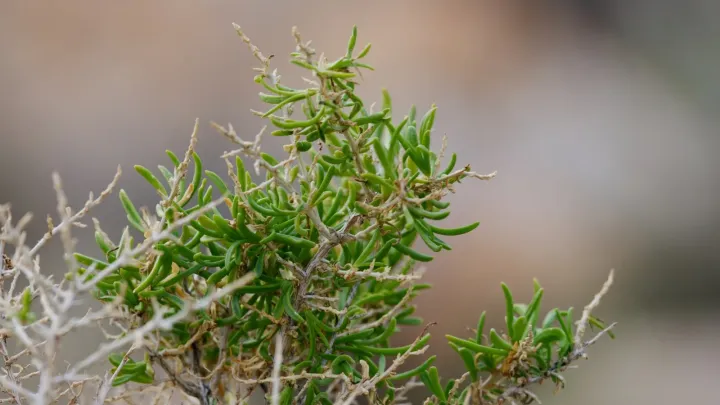
Botanically, the plant is characterized by its stiff, spiny branches and small, fleshy leaves that store water to survive prolonged droughts. Its root system is exceptionally deep, enabling the plant to access groundwater in harsh environments.
The cultural requirements are minimal in terms of nutrient input but demanding regarding soil structure. Greasewood performs best in well-drained, sandy, or clay-heavy soils with high pH levels, and it absolutely requires full sun exposure.
It is an essential plant for environmental management, particularly in arid land restoration. Its ability to stabilize loose soil makes it a priority for land reclamation projects aimed at curbing erosion in desertified regions.
Yield
In agricultural practice, Greasewood is rarely used as a primary cash crop, but it acts as a secondary forage source for livestock. It is particularly valuable for sheep during the winter months when other vegetation is scarce.
Farmers must monitor the grazing intensity, as the plant contains soluble oxalates. If consumed in massive quantities by livestock, especially during the early growth stages, these oxalates can induce toxicity, necessitating careful pasture management.
Main diseases and pests
Greasewood is remarkably resilient against standard agricultural pests and fungal diseases. Its inherent ability to process and sequester high concentrations of salts creates an inhospitable environment for most common crop pathogens.
Threats are primarily environmental rather than biotic. Overgrazing can decimate stands of Greasewood, leading to long-term site degradation. Additionally, significant changes in groundwater tables can negatively impact the density and health of the shrub population.