
Judean sage
Salvia judaica
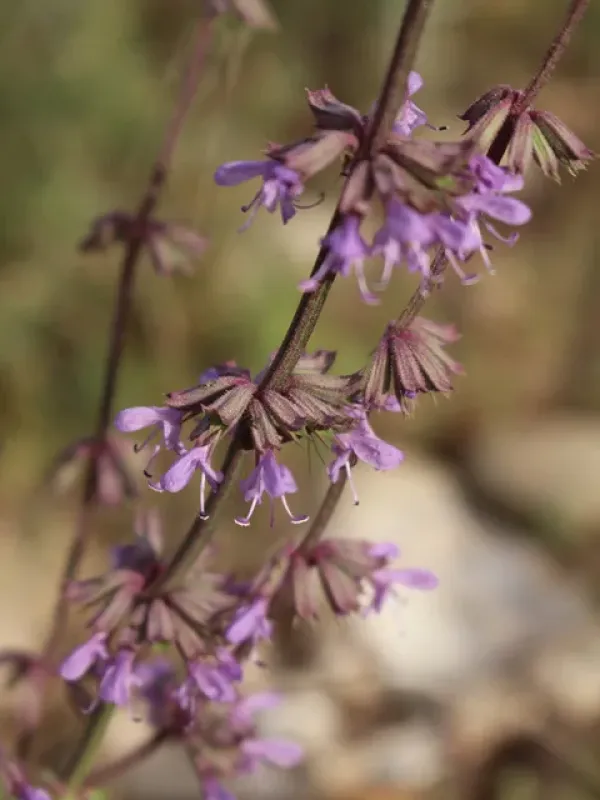
Description
Sowing dates
Judean sage is a perennial herb belonging to the Lamiaceae family. Sowing is typically carried out in autumn or early spring to ensure the seeds undergo natural stratification, which promotes consistent and uniform germination.
In commercial cultivation, seeds are sown in rows spaced 45 to 60 centimeters apart. This spacing is vital to provide adequate airflow and sunlight, which are essential for the plant's structural development and the production of aromatic oils.
The seeds should be sown at a shallow depth of 1–2 centimeters. Proper seedbed preparation is necessary, as small seeds require good soil contact to absorb sufficient moisture for the germination process to begin.
Vegetative propagation via root division or cuttings is also a viable method for establishing fields. This technique ensures genetic consistency across the crop and can lead to faster maturation compared to seed-grown plants.
Newly established plantations require consistent soil moisture until the plants become well-rooted. Once the root system is established, Judean sage exhibits remarkable hardiness and can survive under minimal management.
Growing requirements
Native to the Eastern Mediterranean, Judean sage is highly tolerant to heat and intense sunlight. Open, sunny locations are required to maximize the concentration of essential oils in the foliage and flower spikes.
The plant thrives in well-drained, lime-rich, or sandy-loam soils. It prefers a neutral to slightly alkaline pH and struggles in heavy, waterlogged soils where root rot can easily develop due to lack of oxygen.
Judean sage is characterized by its high drought resistance, making it an excellent crop for arid or semi-arid regions. It requires very little supplemental irrigation once established, which is a significant economic advantage.
Air circulation is crucial for this species. Plantings should be situated on sites with natural airflow to prevent humidity-related issues, especially during the humid transitions between growing seasons.
Application of phosphorus and potassium fertilizers can improve root health and winter hardiness. However, excessive nitrogen should be avoided as it may promote vegetative growth at the expense of oil quality and concentration.
Yield
Judean sage is cultivated primarily for its essential oils and medicinal properties. Yields are generally highest from the second to the fourth year after establishment, making it a reliable multi-year crop.
The timing of harvest is critical for yield optimization. The highest concentrations of secondary metabolites are present during full bloom; therefore, harvesting must coincide with this developmental stage.
Depending on local climate conditions, the plant can produce two harvests per year. The second harvest usually yields less biomass but often contains high-quality aromatic compounds due to the seasonal growth cycle.
A well-maintained plantation can remain productive for up to 7 years. Proper renewal and pruning cycles are necessary to prevent the plant from becoming woody and less productive over time.
Post-harvest processing involves steam distillation or drying. Efficiency in processing is key, as the essential oil content is volatile and can degrade if the raw material is not handled or stored correctly.
Main diseases and pests
The main threats to Judean sage are fungal diseases associated with excessive moisture, such as powdery mildew or root rot. These are primarily managed through careful site selection and spacing.
Weed management is most critical during the first year of establishment. Slow early growth makes the plants susceptible to competition, so regular mechanical weeding between rows is necessary to ensure survival.
Pests like spider mites or aphids may occur in extremely hot and dry seasons. Monitoring is encouraged, and integrated pest management (IPM) strategies are preferred to maintain the organic quality of the herbs.
Soil-borne pathogens can be minimized by avoiding fields with poor drainage. Implementing a crop rotation cycle every few years is also recommended to maintain soil health and reduce disease pressure.
Applying preventative measures, such as proper field sanitation and removing dead plant matter, reduces the incidence of pests and pathogens significantly, ensuring the longevity of the plantation.
Harvesting
Harvesting Judean sage should be performed during dry, sunny weather once the morning dew has evaporated. This practice prevents excess moisture in the collected biomass, which reduces the risk of spoilage.
Mechanical harvesting is common in large-scale operations. It is important to set the cutting height high enough to leave about 15 centimeters of growth, which allows the plant to regenerate for the next season.
Transporting harvested materials to the processing facility must be done promptly. Piling green biomass leads to rapid heating, which destroys the quality of the essential oils and reduces the market value of the crop.
For dried products, the material should be spread in thin layers in a shaded, well-ventilated space with a temperature limit of 40°C to preserve color and volatile oils.
Final storage must occur in airtight containers away from direct sunlight. High-quality packaging is essential to maintain the potency of the medicinal and aromatic compounds over long storage periods.