
Fox willow
Salix vulpina
Description
Sowing dates
Propagation of Salix vulpina is primarily performed through vegetative methods. The most effective approach involves using hardwood cuttings harvested in early spring before the start of bud break.
Cuttings should be selected from healthy one- or two-year-old shoots, ensuring that each piece has several viable nodes to support future root and shoot development.
Planting is performed directly into prepared, moist soil as soon as the ground temperatures consistently reach 8–10 degrees Celsius, ensuring optimal conditions for rooting.
On commercial plantations, cuttings are placed in furrows at specific intervals, maintaining a density that encourages straight, uniform growth suitable for industrial needs.
During the initial growth period, proper weed control and moisture management are critical to ensure that young plants establish a robust root system before the summer heat.
Growing requirements
The Fox willow belongs to the Salicaceae family and is native to regions of East Asia, including the Russian Far East and Japan, where it typically inhabits wetlands and riverbanks.
This species thrives in high-moisture environments, preferring fertile, loamy soils that can retain water but remain well-drained to prevent excessive root rot.
Salix vulpina demonstrates impressive cold hardiness, allowing it to adapt to various climates with severe winters, provided there is adequate site moisture throughout the growing season.
While the willow prefers full sun exposure for maximum biomass accumulation, it is capable of tolerating partial shade without compromising its overall structural integrity.
Soil pH preference is broad, though the plant shows optimal nutrient uptake in slightly acidic to neutral soil profiles enriched with organic matter common in riparian zones.
Yield
The primary economic value of the Fox willow lies in its production of high-quality flexible twigs, which are highly valued in the basketry and handicraft industries.
Yield capacity depends on plantation management, including fertilization and irrigation schedules, typically ranging from 5 to 8 tons of dry raw material per hectare.
Harvest cycles are adjusted based on the required material thickness; annual harvests produce fine, flexible twigs, whereas biennial harvests are ideal for sturdier structural components.
Beyond material production, Salix vulpina is widely utilized for environmental services, specifically in soil stabilization and riverbank erosion control due to its extensive root structure.
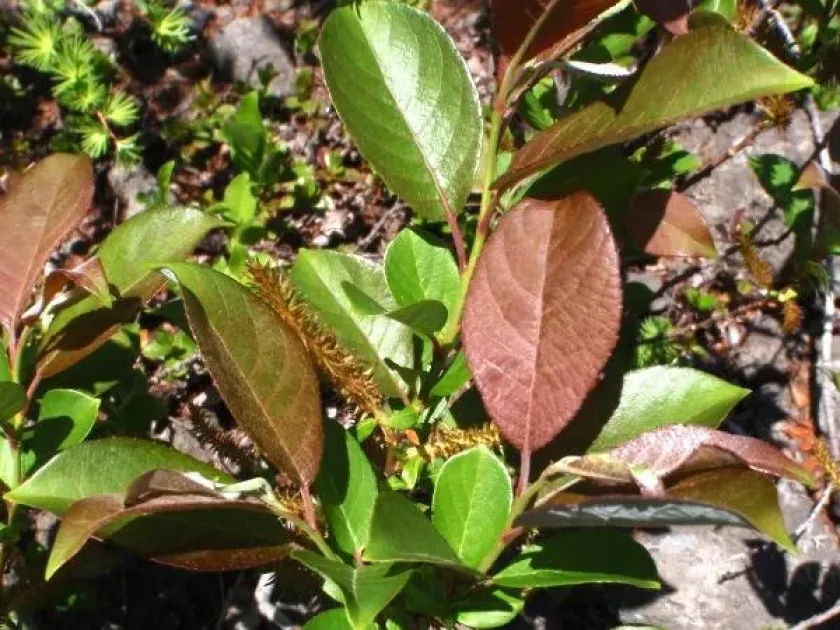
The plant also serves an ornamental function in landscape design, prized for its unique foliage and reddish-toned shoots that provide visual interest across all seasons.
Main diseases and pests
The most common pathological threats to Salix vulpina include fungal infections such as willow rust and scab, which flourish in high-humidity conditions with poor air circulation.
Pests such as willow leaf beetles and various weevil species pose risks to leaf tissue and juvenile shoots, necessitating regular monitoring to prevent significant damage.
Effective management includes sanitary pruning of infected plant tissue to reduce spore load and prevent the spread of diseases within the plantation area.
Integrated pest management strategies, focusing on biological controls, are recommended to preserve ecological balance and prevent the accumulation of chemical residues in the harvest.
Early identification of pest outbreaks through scouting allows for localized interventions, which protects the overall yield and maintains the premium quality of the harvested wood.
Harvesting
Harvesting typically occurs during the plant's winter dormancy, when the sap has ceased flowing, ensuring maximum durability and decay resistance of the harvested stems.
Once harvested, twigs are sorted by length, diameter, and flexibility, then bundled and stored in well-ventilated areas to prevent fungal growth while allowing for consistent moisture loss.
Proper drying is essential to maintain the structural elasticity required for intricate weaving projects and to ensure the longevity of the final artisanal products.
The plant's ability to coppice effectively allows for consistent, multi-year production from the same rootstock, provided that the stools are not damaged during the cutting process.
Careful attention to cutting techniques prevents injury to the main stool, which is vital for maintaining the long-term health and productivity of the plantation throughout its life cycle.