
Bulltongue arrowhead
Sagittaria lancifolia
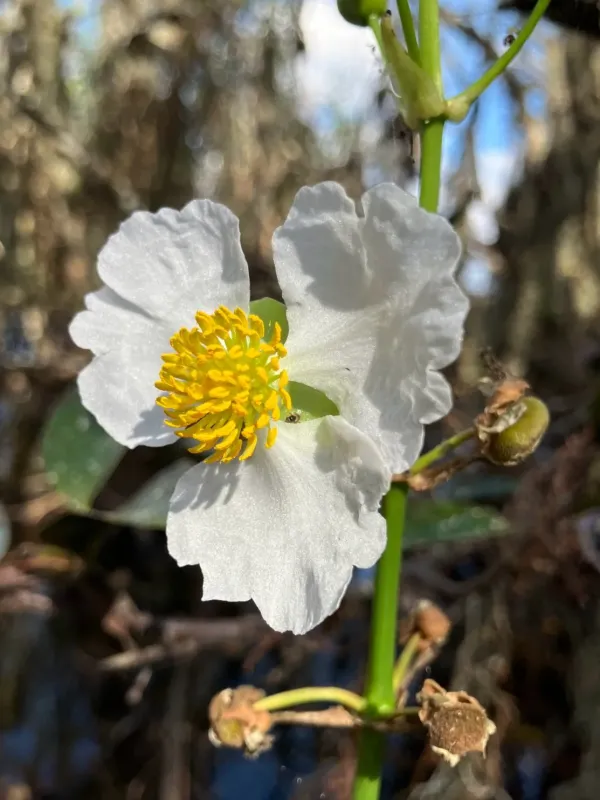
Description
Growing requirements
Bulltongue arrowhead (Sagittaria lancifolia) is a perennial aquatic plant belonging to the Alismataceae family. It is widely recognized for its robust growth habit and distinct, lance-shaped foliage that rises prominently above the water surface.
Native to the Americas, this species thrives in swampy areas, wetlands, and along the margins of ponds and rivers. Its distribution spans across tropical and subtropical zones, where it serves as a key component of the aquatic ecosystem.
The plant features a creeping rhizome system that anchors it firmly in the substrate, often in muddy or silty soils. It is well-adapted to fluctuating water levels, making it a resilient choice for managed aquatic environments and specialized cultivation.
Cultivation requirements focus primarily on water depth and light availability. The plant requires constant soil moisture and prefers full sun or light shade to maintain its vigorous growth rate and aesthetic appeal throughout the growing season.
For optimal development, the soil should be rich in organic matter. While it can adapt to various pH levels, a neutral to slightly acidic environment promotes the best leaf development and rhizome expansion in agricultural settings.
Main diseases and pests
Aphids represent a primary pest threat, often clustering on the undersides of leaves and on floral stalks. Their feeding habits can lead to leaf curling and weakened overall vitality, necessitating early detection and intervention.
Fungal pathogens such as leaf spot diseases are prevalent in conditions with poor air circulation and excessive humidity. Maintaining proper spacing between individual plants is a critical cultural practice to reduce the impact of these diseases.
Root rot, often caused by stagnant water conditions or the buildup of anaerobic gases in the substrate, can be devastating. Ensuring the water remains oxygenated is essential for preventing the decay of the rhizome system.
Invasive aquatic species can compete for nutrients and space, potentially choking out the Bulltongue arrowhead. Regular monitoring and manual removal of unwanted vegetation are necessary for maintaining healthy crop stands.
Mollusks and certain aquatic insects may feed on young leaves, creating aesthetic damage. Integrated pest management, focusing on biological controls, is preferred to maintain the health of the aquatic environment and the plants themselves.