
Bunched arrowhead
Sagittaria fasciculata
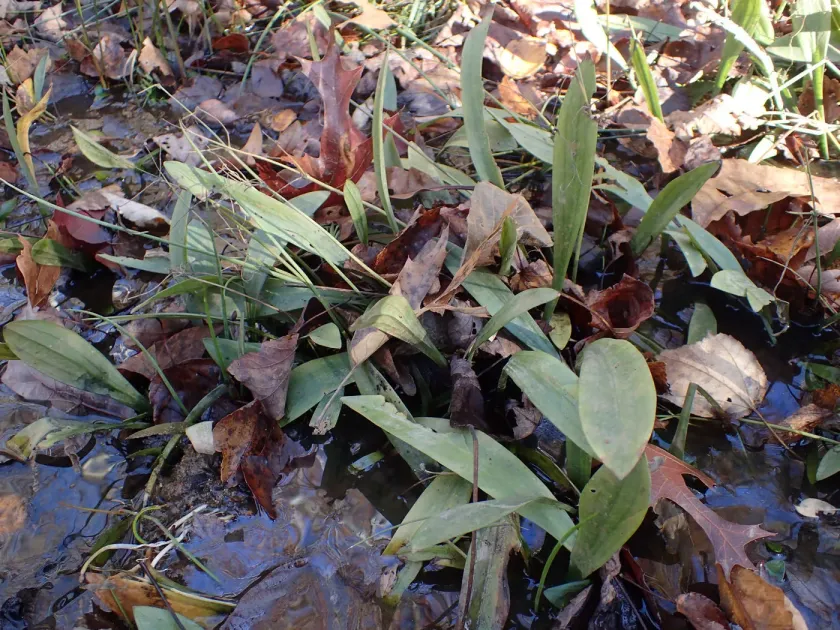
Description
Growing requirements
Bunched arrowhead (Sagittaria fasciculata) is a distinct aquatic herbaceous perennial belonging to the Alismataceae family. It is recognized for its unique adaptation to wetland environments, specifically shallow depressions or pools where water persists seasonally.
The plant is endemic to restricted regions in the Southeastern United States, particularly within the states of North and South Carolina. It thrives in habitats characterized by acidic, nutrient-poor, but saturated soils, often found in Carolina bays and similar depression wetlands.
Botanically, Sagittaria fasciculata is distinguished by its crowded, fascicled leaves that emerge from a central corm or rhizome. Unlike some other members of the genus, it exhibits specific growth forms that are tightly linked to the hydration levels of its immediate substrate.
Regarding environmental requirements, this species demands specific hydrological stability. It is sensitive to rapid water level fluctuations and requires high light intensity to sustain its metabolic processes during the peak growing season.
While not a traditional agricultural commodity, the plant holds significant ecological value. Its cultivation is primarily focused on conservation biology, wetland restoration projects, and providing habitat diversity for various aquatic fauna in botanical research settings.