
Saba senegalensis
Saba senegalensis
Description
Growing requirements
Saba senegalensis, commonly known as Sawa or Saba, is a perennial woody vine belonging to the Apocynaceae family. This species is native to tropical Africa, ranging from Senegal to Sudan and extending into parts of Angola, thriving in diverse savannah and forest ecosystems.
The plant is adapted to tropical climates with distinct wet and dry seasons. It prefers well-drained soils, ranging from sandy to loamy textures. While it is highly drought-tolerant once established, it requires sufficient water during its initial growth stages to develop a strong root system.
Botanically, Saba senegalensis is a vigorous liana that utilizes trees for vertical growth. Its leaves are simple, opposite, and leathery, a trait that helps the plant conserve moisture and withstand intense heat throughout the dry months.
In an agricultural context, providing adequate support structures is essential for maximizing yield and easing the harvesting process. The plant is considered a robust species that can be successfully integrated into agroforestry systems to prevent soil erosion and promote biodiversity.
Propagation is typically done through seeds, though vegetative propagation via cuttings is possible. Farmers should ensure that young plants are sheltered from harsh direct sunlight and competing vegetation until they become sufficiently woody and independent.
Yield
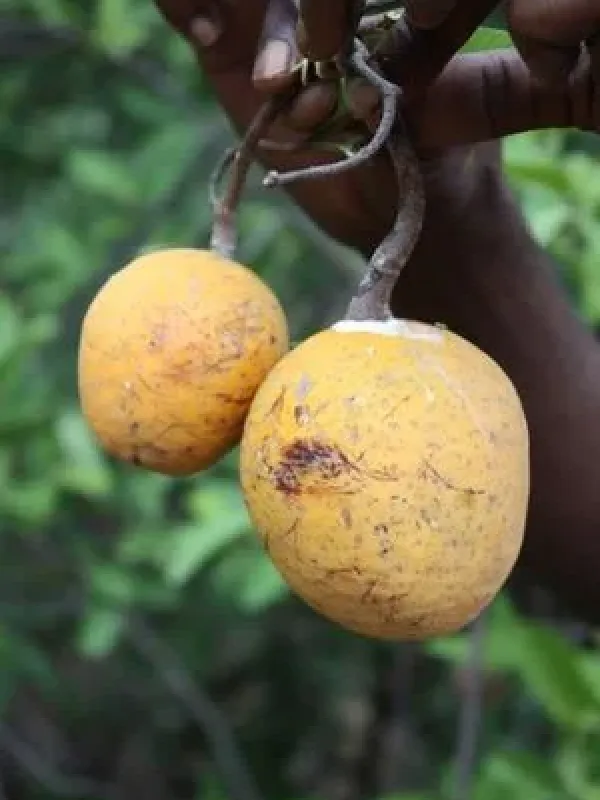
The fruit of Saba senegalensis is a globose, yellowish-orange berry containing a sweet-acidic, juicy pulp. It is a highly valued non-timber forest product, providing essential vitamins, particularly vitamin C, to local populations.
Yields vary depending on the age of the vine and the availability of nutrients. As a mature liana, it can produce a substantial harvest of fruits annually, making it an economically significant crop for rural communities in the Sahelian and Guinean zones.
The pulp is versatile and used for juices, jams, and traditional medicinal preparations. Its high pectin content makes it particularly useful for commercial food processing, where it serves as a natural thickening agent for various food products.
Beyond the fruit, the plant’s latex is historically significant. Although its use in commercial rubber production has declined, it remains an area of interest for biochemical research due to its unique properties and chemical composition.
Effective management, including regular pruning and thinning of the canopy, can significantly enhance the quantity and quality of the harvest. Consistent maintenance helps redirect the plant's energy toward reproductive development rather than purely vegetative growth.
Main diseases and pests
While Saba senegalensis is a hardy species, it is susceptible to fungal root rots if grown in waterlogged or poorly drained soils. Preventing soil saturation is the primary defense against these types of soil-borne pathogens.
Insect pests, particularly various species of fruit flies, can cause damage to ripening fruit. Integrated pest management strategies, such as orchard sanitation and the removal of fallen or decaying fruits, are crucial to prevent the build-up of pest populations.
Nematodes can pose a challenge in nurseries or in plots where the soil has been heavily depleted. Using sterile soil media for initial seedling development significantly reduces the risk of early-stage infestation and promotes healthy plant vigor.
Leaf-eating insects may affect the foliage, but they rarely threaten the survival of mature, healthy vines. Monitoring the plant for signs of stress is important, as weakened plants are more susceptible to secondary infestations and diseases.
Maintaining proper spacing between vines is essential to ensure adequate airflow within the canopy. Good ventilation reduces humidity around the leaves and stems, creating a less favorable environment for the development of mold and other fungal diseases.
Harvesting
Harvesting Saba senegalensis is a seasonal activity that requires careful timing. The fruits are typically harvested once they reach their characteristic color change and aromatic maturity, signaling that the pulp is sweet and ready for consumption.
Because the fruits do not all ripen at the same time, manual, selective harvesting over several weeks is standard practice. Harvesters should use sharp tools to cut the fruit stalks carefully, avoiding damage to the vine's main stems.
Post-harvest handling is critical due to the perishable nature of the fruit. After collection, the fruits should be kept in a cool, shaded area to minimize spoilage and moisture loss until they can be processed or taken to the local market.
Protective gloves are recommended during harvest because the plant produces a white, sticky latex when injured. This latex can cause skin irritation, and careful handling prevents unnecessary sap flow from the vine, which could otherwise weaken the plant.
For large-scale processing, sorting the fruits by ripeness level is beneficial. Less mature fruits can be separated for storage or specific processing methods, while fully ripe fruits should be prioritized for immediate extraction of juice or pulp.