
Common rue
Ruta graveolens L.
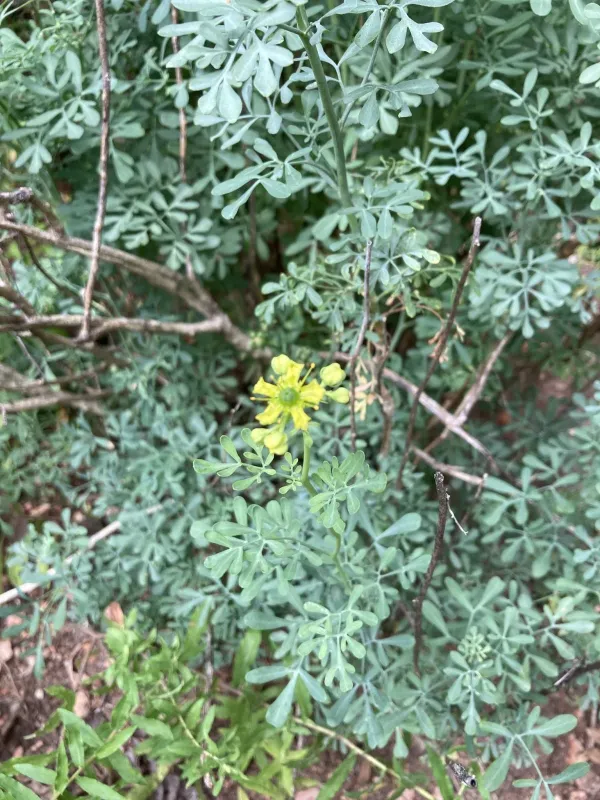
Description
Sowing dates
Seeds of common rue are sown outdoors in spring, once the soil warms up to 10–12 degrees Celsius, typically in April or early May. Fall sowing is also possible, which often results in more uniform germination the following spring.
When starting indoors, seeds are sown in trays in March. Seedlings should be transplanted to their permanent location once they develop 3–4 true leaves, maintaining a spacing of 40 by 50 centimeters to ensure adequate growing space.
The crop is characterized by slow initial growth, making it essential to control weeds in the rows regularly. Rue transplants well, provided the root ball remains intact during the planting process.
Seeds maintain viability for 2–3 years when stored in a cool, dry place. The recommended planting depth is shallow, usually no more than 1–1.5 centimeters below the soil surface.
To improve germination, seeds can be stratified for 30 days at low positive temperatures. This pre-treatment enhances seedling vigor and ensures a more consistent stand in the field.
Growing requirements
Common rue (Ruta graveolens) is a perennial subshrub belonging to the Rutaceae family. It thrives in open, sunny locations as it is highly sensitive to shade, which significantly reduces the concentration of essential oils in the foliage.
The plant prefers light, well-drained loamy or sandy soils enriched with lime. It is strictly intolerant of waterlogged conditions and heavy, acidic soil types, which often lead to root failure.
Successful cultivation requires moderate irrigation, especially during dry spells, although mature plants exhibit high drought tolerance. Avoid overwatering, as poor drainage frequently causes root rot.
The optimal temperature range for active growth is between 20–25 degrees Celsius. While rue is generally winter-hardy, in regions with harsh winters without snow cover, it is advisable to provide light mulch for winter protection.
Agricultural management involves regular soil aeration to prevent surface crusting. Nitrogen fertilization should be applied sparingly, as excess nitrogen promotes excessive vegetative growth at the expense of secondary metabolites.
Main diseases and pests
Common rue possesses a distinctive odor that acts as a natural deterrent for many pests. However, poor management practices can occasionally lead to infestations of spider mites or aphids.
Fungal diseases are the primary threat, usually triggered by poor drainage or insufficient air circulation around the plants. Common issues include root rot and Fusarium wilt.
Integrated pest management, including the use of biological control agents, is recommended, especially since the foliage is often harvested for medicinal use. Chemical pesticides should be avoided or used with strict adherence to harvest intervals.
Preventative measures include practicing crop rotation and avoiding sites previously used for other plants in the Rutaceae family. Always source high-quality seeds and promptly rogue any symptomatic plants to prevent spread.
Maintaining adequate soil drainage and regular weeding helps keep the environment inhospitable to pathogens and minimizes the need for chemical intervention.
Harvesting
The harvest should take place during full bloom, when the concentration of essential oils in the aerial parts is at its peak. Depending on local climate conditions, this is usually between June and August.
Stems are cut at a length of approximately 20 centimeters, avoiding the overly woody lower parts of the plant. Typically, two harvests per season are possible, yielding a good volume of high-quality biomass.
Drying is best performed in shaded, well-ventilated areas or in controlled dryers at temperatures not exceeding 35–40 degrees Celsius. Excessive heat leads to the rapid evaporation of valuable aromatic oils.
Properly dried product should retain its natural greenish-blue hue and characteristic spicy fragrance. Store the dried herb in airtight containers away from direct sunlight to preserve its efficacy and aroma.
Given its wide application in pharmaceuticals, perfumery, and as a culinary herb, strict adherence to harvest and post-harvest standards is critical for maintaining market quality.