
Rudolfiella aurantiaca
Rudolfiella aurantiaca
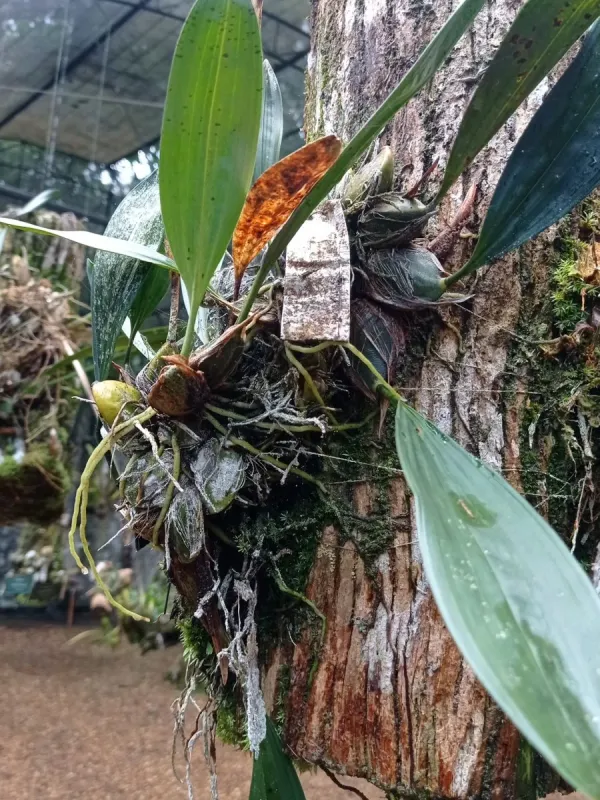
Description
Growing requirements
Rudolfiella aurantiaca is an epiphytic species belonging to the Orchidaceae family. It is native to the humid tropical forests of South America, specifically regions in Colombia and Ecuador, where it grows in shaded, humid conditions.
The culture requires a high level of ambient humidity, ideally between 70% and 80%. In cultivation, maintaining this humidity level is essential for preventing leaf tip browning and ensuring proper gas exchange through the stomata.
The substrate must be highly breathable. A mixture of pine bark, charcoal, and perlite or sphagnum moss is recommended to provide both structural support and the necessary aeration for the sensitive epiphytic root system.
Temperature requirements are consistent with warm-growing orchids. The plants thrive in temperatures ranging from 20°C to 26°C. They do not tolerate cold drafts or temperatures dropping significantly below 15°C.
Lighting should be bright but filtered. In natural habitats, these plants are shaded by the forest canopy, so direct midday sun exposure must be avoided to prevent chlorophyll degradation and leaf tissue damage.
Main diseases and pests
Spider mites are a primary concern for Rudolfiella aurantiaca, especially in environments where humidity levels are not strictly managed. They thrive in dry air, causing stippling and eventual leaf loss.
Mealybugs can also infest the plant, hiding in the leaf axils. Regular inspection is necessary to detect these pests early and apply appropriate control measures before the population becomes unmanageable.
Root rot is the most common physiological disorder, usually caused by overwatering or the use of decomposed substrate that holds too much water. Proper drainage is the best preventative strategy.
Fungal leaf spots can occur when water is left on the foliage overnight. It is recommended to perform all watering early in the morning and ensure that the plant has sufficient time to dry before evening.
Scale insects may attach to the pseudobulbs, draining nutrients from the plant. Manual removal using an alcohol-soaked swab is often effective for small infestations in a home or greenhouse collection.