
Royal palm
Roystonea regia
Description
Growing requirements
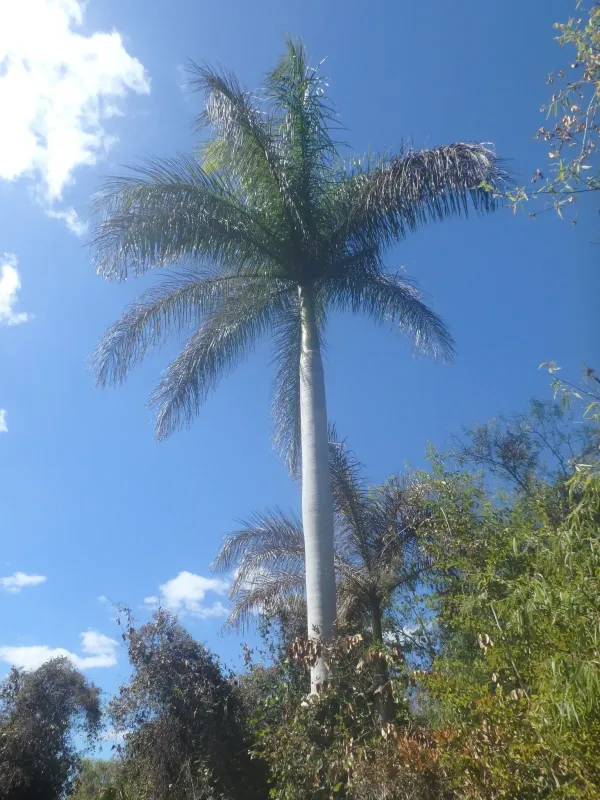
The Royal palm, or Roystonea regia, is a prominent member of the Arecaceae family. Originating from the Caribbean, southern Florida, and Mexico, it is widely cultivated across tropical and subtropical regions for its striking aesthetic appearance and imposing size.
These plants thrive in regions with consistent warmth, ideally where temperatures remain consistently above 15 degrees Celsius. They demand high humidity levels and full sun exposure, which is essential for developing the characteristic vibrant green foliage and sturdy, smooth trunks.
In terms of soil, Roystonea regia performs best in deep, fertile, and well-draining substrates. While it is relatively adaptable to various soil types, it performs poorly in compacted or waterlogged ground, which can lead to rapid root rot and physiological stress for the specimen.
Successful management involves regular supplemental irrigation during the dry season and a strict fertilization program. Professionals often utilize slow-release fertilizers containing a balanced ratio of nitrogen, phosphorus, potassium, and essential micronutrients like boron and magnesium to maintain optimal palm health.
Economically, the Royal palm is invaluable in landscaping and urban planning. Additionally, its fruits represent a secondary agricultural resource, as they are rich in fats and are commonly harvested as feed for livestock in countries like Cuba, serving as a sustainable supplement in farm diets.
Main diseases and pests
The primary pathological threat to the Royal palm is lethal yellowing disease. This systemic infection causes rapid defoliation and death of the crown, often leading to the complete loss of the tree within several months if not managed through rigorous insect vector control.
Pest pressures are primarily caused by palm weevils and scale insects that can weaken the structural integrity of the plant. Integrated pest management strategies, including the use of systemic pesticides and regular monitoring of the growing point, are vital to ensuring the longevity of these majestic trees.