
Austrian yellowcress
Rorippa austriaca (Crantz) Besser
Description
Growing requirements
Austrian yellowcress (Rorippa austriaca) is a persistent perennial herbaceous plant belonging to the Brassicaceae family. It is recognized globally as a competitive weed species due to its aggressive root system and high reproductive capacity.
The plant originates from Southeastern Europe and has spread across many temperate regions of the Northern Hemisphere. It thrives in disturbed habitats, agricultural fields, and riparian zones, displaying a wide range of ecological adaptability to different climates.
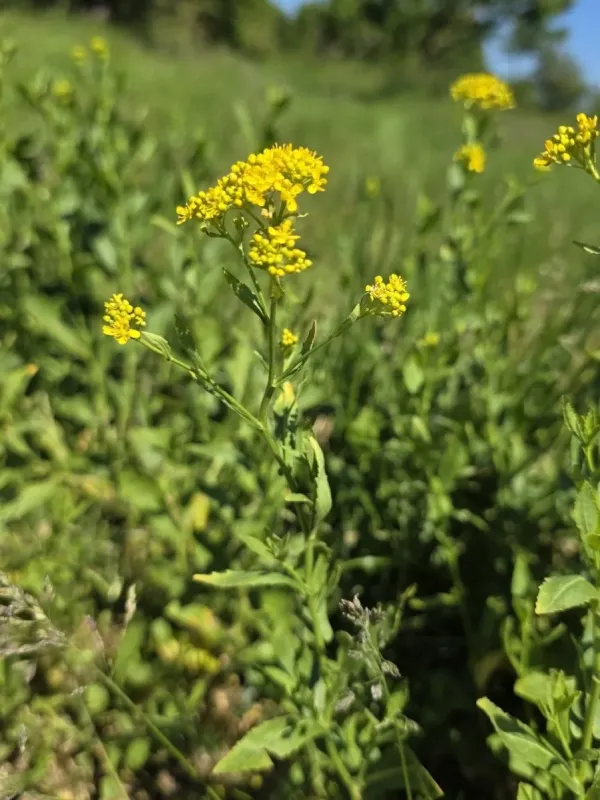
Botanically, it features a complex rhizomatous system that allows it to regenerate quickly from small fragments. The aerial part consists of branched stems reaching up to 80 cm, lanceolate leaves with serrated margins, and bright yellow flowers that bloom in compact racemes.
Regarding environmental needs, it prefers moist, nutrient-rich soils. While it can survive in various soil types, it is most prolific in fertile, heavy textures that retain moisture throughout the growing season, which is why it often becomes a problem in irrigated crops.
From an agricultural standpoint, it is primarily viewed as a noxious weed that competes with crops for water, light, and soil nutrients. Although not traditionally cultivated for commercial use, its botanical interest lies in its chemical composition, including high levels of glucosinolates common to the mustard family.
Main diseases and pests
Typical pests affecting Rorippa austriaca include flea beetles, which can cause significant defoliation. These pests are highly mobile and easily migrate from wild populations of yellowcress into commercial mustard or canola crops, complicating pest control strategies.
Pathogen risks include susceptibility to clubroot (Plasmodiophora brassicae) and various downy mildew fungi. These diseases can persist in the soil or on plant debris, making the presence of this weed in or near fields a major risk factor for spreading diseases to susceptible agricultural brassica crops.