
Roridula dentata
Roridula dentata
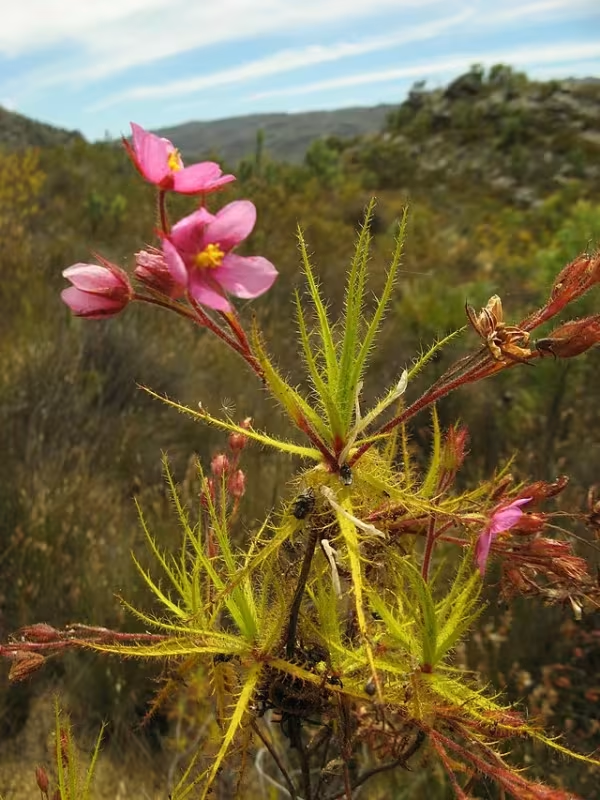
Description
Sowing dates
Growing Roridula dentata from seeds is a sophisticated process that requires mimicking the specific environmental cues of its native habitat.
The optimal sowing period is during the late winter months to allow seedlings to establish before the peak of the growing season.
Seeds should be sown on the surface of a sterile, acidic, and well-draining substrate such as a peat and perlite mixture.
Exposure to specific temperature fluctuations is often necessary to break seed dormancy and ensure successful germination.
Maintaining high ambient humidity and consistent lighting is critical during the initial development stages of the young plantlets.
Growing requirements
Roridula dentata belongs to the Roridulaceae family and is an endemic species native to the Cape region of South Africa.
This species requires a Mediterranean-like climate with plenty of sunlight and well-ventilated conditions to thrive properly.
The soil composition must be nutrient-poor and acidic, as the plant is adapted to survive in environments with very low nitrogen availability.
Water quality is paramount; only distilled or deionized water should be used to prevent the accumulation of toxic minerals in the soil.
The root system is extremely sensitive to moisture levels, necessitating a setup that allows for efficient drainage after irrigation.
Main diseases and pests
The most significant threat to this plant is root rot caused by poor soil drainage and stagnant water in the growing medium.
Fungal pathogens thrive in high-humidity environments with low airflow, which can quickly devastate a collection of these plants.
Pests like mealybugs and spider mites may occasionally infest the sticky leaves, causing damage to the plant's photosynthetic surface.
Chemical fertilizers are generally prohibited, as the plant's delicate tissues can be easily burned by excess nutrient salts.
Regular inspection and maintaining an optimal microclimate are the most effective strategies for preventing common health issues.