
Romulea obscura
Romulea obscura
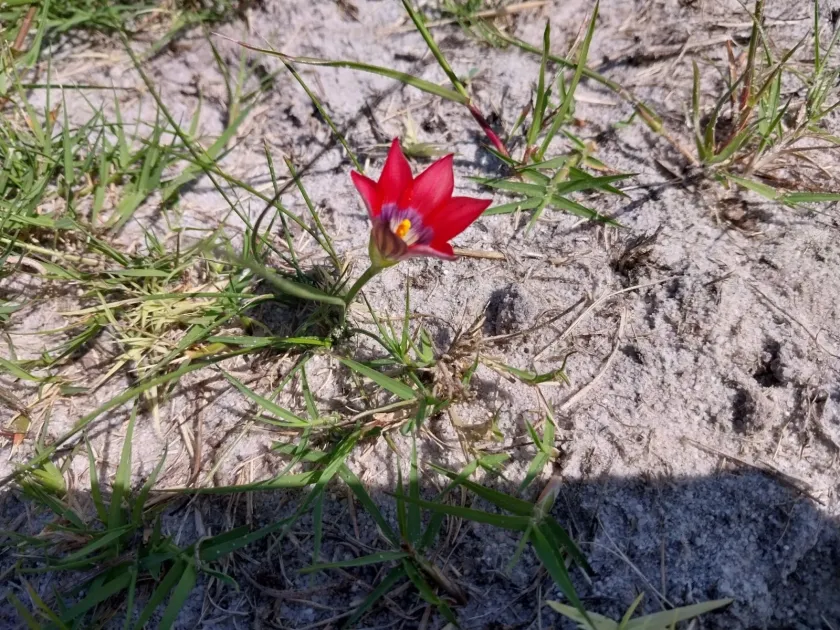
Description
Growing requirements
Romulea obscura belongs to the Iridaceae family, a group of monocotyledonous flowering plants. This species is native to South Africa, where it has evolved to thrive in specific mediterranean-like environments.
The plant is a small cormous perennial that produces grass-like foliage and vivid, funnel-shaped flowers. The specific epithet "obscura" reflects its typical coloration, often featuring dark markings on the petals.
For successful cultivation, Romulea obscura requires well-draining, sandy soil conditions. It is highly sensitive to excessive moisture, particularly during the dormant summer period when the corm must remain dry to avoid fungal rot.
Sunlight is a critical factor for this species. It demands full exposure to light to initiate blooming cycles. Insufficient light levels usually result in poor development of the vegetative mass and lack of flowering.
In terms of agricultural and horticultural use, it is primarily valued by collectors and enthusiasts of rare bulbous plants. Its management involves mimicking the natural dry seasons of its native range to ensure the corm survives and thrives throughout the year.