
Romulea komsbergensis
Romulea komsbergensis
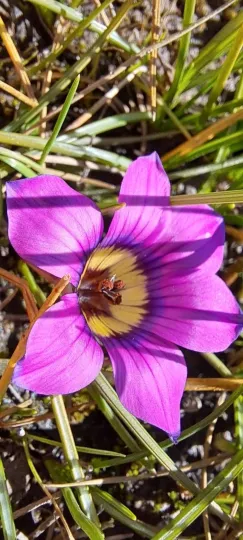
Description
Growing requirements
Romulea komsbergensis is a perennial cormous plant belonging to the Iridaceae family. It is a highly specialized species with a restricted natural distribution, known for its unique botanical profile and aesthetic appeal.
The plant originates from the high-altitude regions of South Africa. Its life cycle is strictly adapted to the Mediterranean-style climate, featuring cool, moist winters followed by hot, arid summers which serve as a mandatory dormancy period.
Botanically, it features narrow, grass-like leaves and attractive, funnel-shaped flowers. The blossoms are typically vibrant in color, often showcasing distinctive markings that act as guides for local pollinators within their native ecosystem.
Cultivation requirements demand well-draining, sandy, or rocky soil profiles. The species is highly sensitive to root moisture levels; thus, growing media must prevent water retention at all costs to ensure the health of the corms.
The plant thrives in full sun exposure. It requires intense solar radiation to trigger the flowering process, making it unsuitable for shaded garden spots or environments with high cloud cover during its active growth phase.
Main diseases and pests
The primary threats to Romulea komsbergensis are fungal pathogens that thrive in humid soil conditions. These pathogens attack the corms during the dormancy period, leading to rapid decay and loss of the entire plant.
Pests such as bulb-feeding larvae and nematodes can pose severe risks in agricultural or garden settings. Monitoring soil health and ensuring strict moisture management are essential practices to protect the plants from these threats.