
Romulea hantamensis
Romulea hantamensis
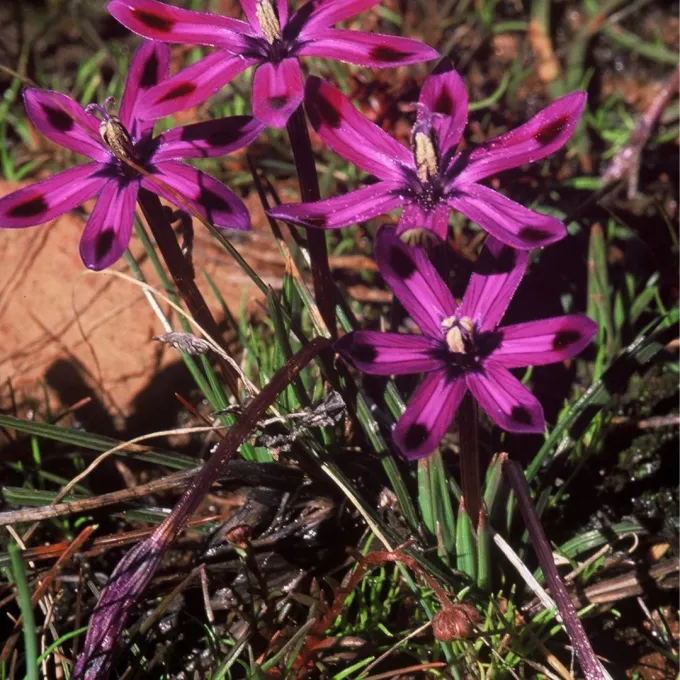
Description
Growing requirements
Romulea hantamensis is a geophyte species belonging to the Iridaceae family. Native to the Hantam region in South Africa, it is highly adapted to a Mediterranean-style climate with distinct wet and dry seasons.
The plant grows from a small corm that requires specific soil conditions to thrive. It naturally inhabits stony, well-drained slopes, meaning it demands a substrate that allows for rapid water percolation and high aeration.
Agricultural success depends on providing high light intensity. In cultivation, even slight shading can negatively impact the development of the foliage and the overall vigor of the plant, often resulting in a lack of flowering.
Water management is the most critical aspect of the plant's life cycle. During the growing season (winter-spring), the soil should be consistently moist but never waterlogged. Once the leaves begin to yellow, irrigation must be completely ceased.
Temperature regulation is also vital; the plant requires cool, mild winter temperatures for growth and heat for the dormant summer corm maturation phase.
Main diseases and pests
Fungal pathogens are the primary threat to Romulea hantamensis. Botrytis and Fusarium species are highly active if humidity levels remain too high, particularly when the corms are in their dormant state.
Pests such as mites and soil-borne insects may infest the corms, causing physical damage that opens the door for secondary bacterial infections. Regular inspection of stored corms is essential to prevent the spread of decay.
Improper drainage is the leading cause of plant loss, as it creates an anaerobic environment that fosters root rot. It is essential to ensure that the potting medium remains loose and inorganic materials like grit are included.
Preventative measures include treating bulbs with fungicides and ensuring excellent air circulation within the growing environment.
- Use of high-quality inorganic growing media components.
- Strict adherence to a dry summer resting period.
- Frequent sanitation of tools and growing surfaces.