
Roldana petasitis
Roldana petasitis
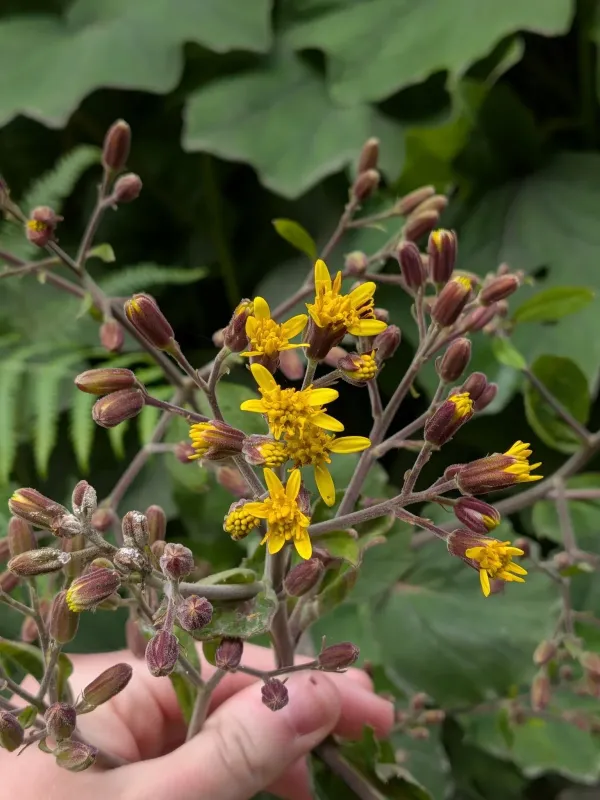
Description
Growing requirements
Roldana petasitis is a striking perennial plant belonging to the Asteraceae family. Originating from the mountainous regions of Mexico and Central America, it is highly regarded in horticulture for its large, velvety, palmately lobed foliage and vibrant yellow inflorescences.
Botanically, this species is known for its architectural form, often used in conservatories and greenhouse settings. It thrives in environments that replicate its native cloud forest habitat, necessitating consistent humidity and stable temperatures.
For successful cultivation, the plant requires well-drained, nutrient-rich soil. A mix of peat, leaf mold, and horticultural sand or perlite is recommended to ensure that roots remain healthy and free from waterlogging.
Light requirements are specific: Roldana petasitis prefers bright, indirect light. Direct sunlight, especially during the afternoon, can cause leaf scorch and damage the soft, pubescent texture of the foliage.
Temperature management is critical for the plant's health. It performs best in moderate conditions and appreciates a cooler, resting phase during the winter months, which encourages a more vigorous blooming cycle in the spring.
Main diseases and pests
The most common pests affecting this culture are spider mites and aphids, which thrive in dry indoor environments and target the plant's succulent growth tips.
Fungal issues, particularly root rot, are prevalent if the irrigation schedule is too frequent or if the soil medium fails to provide adequate drainage for the root system.
Good air circulation is essential to prevent the buildup of pathogens, such as powdery mildew, which can easily establish on the dense leaf surfaces of the plant.
Preventive maintenance includes checking the underside of leaves for early signs of infestation and ensuring the plant is not overcrowded with other foliage.
Integrated pest management strategies, including the use of neem oil or insecticidal soaps, are effective if applied promptly upon detecting the first signs of pest activity.