
Rhodiola rosea
Rhodiola rosea L.
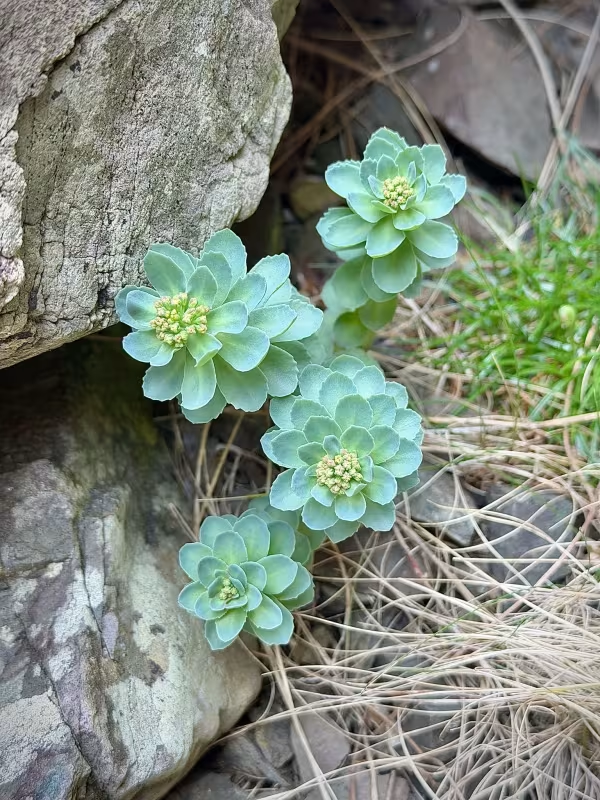
Description
Sowing dates
Rhodiola rosea is typically propagated vegetatively by dividing rhizomes, which ensures faster plant establishment and genetic uniformity. The best time for planting is early spring before active growth begins or in late autumn after the plant enters dormancy.
Seed propagation is also possible but requires cold stratification for several months to break dormancy. Seeds should be sown in late autumn directly into the field or started in a greenhouse to provide a controlled environment for the delicate seedlings.
When sowing, seeds are placed at a very shallow depth, barely covered with soil, as they have limited energy reserves. Keeping the seedbed moist is crucial during the germination phase to ensure consistent emergence.
Row spacing should be approximately 50–60 cm to allow for weed management and air circulation. In the first growing season, seedlings remain small and require meticulous care to prevent them from being overwhelmed by faster-growing weeds.
Establishing a new plantation requires clean field preparation. Using a weed-free area and implementing early-stage manual weeding is essential for the long-term success of the medicinal crop.
Growing requirements
Belonging to the Crassulaceae family, Rhodiola rosea is a hardy perennial adapted to high-altitude or subarctic climates. It thrives in cool temperatures and requires well-drained, porous, and aerated soils.
The crop does not tolerate waterlogging; therefore, sandy loam or rocky soils are ideal. Drainage is the most critical factor for successful cultivation, as stagnant water is a primary cause of root rot in these plants.
Rhodiola prefers neutral to slightly acidic pH levels. While it is extremely cold-tolerant, it requires sufficient moisture throughout the growing season to ensure robust development of the rhizomes, which are the main commercial part.
Although the plant is adapted to sunny mountain habitats, in warmer lowland climates, partial shade during the hottest part of the day can help prevent heat stress and maintain plant vigor.
Mulching is a highly recommended practice for Rhodiola plantations. It helps maintain a stable soil temperature, retains essential moisture, and suppresses the growth of competitive weeds between the rows.
Yield
The commercial harvest of Rhodiola rosea roots occurs when the plants are 3 to 5 years old. Harvesting earlier results in lower concentrations of active compounds like rosavin and salidroside.
Yield expectations depend on site conditions and plant density. With good agronomic practices, yields of dry roots can reach 1.5 to 2.5 tonnes per hectare. The weight of individual rhizomes varies based on the age of the plant.
Once the plant passes 5 or 6 years, the center of the rhizome often becomes woody and hollow, which decreases the quality and medicinal value of the final harvest. Therefore, timely harvest is essential for efficiency.
Nutrient management focuses on potassium and phosphorus, which support root expansion. Excessive nitrogen fertilization should be avoided as it may promote lush leaf growth at the expense of the root’s medicinal composition.
Post-harvest processing involves significant weight reduction. Freshly harvested roots contain a high percentage of moisture, which is reduced through precise drying techniques to preserve the integrity of the bioactive components.
Main diseases and pests
Root rot, often caused by pathogens like Fusarium, is the most severe threat to Rhodiola crops. This usually occurs due to poor soil drainage or excessive irrigation during the rainy season.
Soil-borne pests such as wireworms and beetle larvae can damage the roots, creating entry points for fungal infections. Integrated pest management using preventative soil preparation is the preferred strategy.
Aphids can occasionally infest the foliage during the flowering stage. However, as it is a medicinal crop, chemical control is restricted, favoring biological or physical intervention methods whenever possible.
Powdery mildew may appear on the leaves in dense, poorly ventilated plantings. Proper spacing and removing diseased debris help in managing the spread of the fungus throughout the field.
Diligent observation of the crop for yellowing or stunted patches is necessary. Early detection allows for the removal of isolated infected plants before the problem spreads across the entire plantation.
Harvesting
Harvesting begins after the growing season when the aerial parts of the plants start to senesce and turn yellow. This typically takes place in late summer or early autumn, coinciding with the peak concentration of active ingredients.
Rhizomes are mechanically lifted or hand-dug, cleaned of soil, and thoroughly washed with cool water. Care must be taken to minimize abrasions or damage to the rhizome bark during this cleaning process.
After washing, roots are chopped into smaller segments to facilitate drying. Initial wilting happens in shaded, airy conditions for several days before the final drying stage in a regulated environment.
Final drying should be done in a forced-air dryer at temperatures not exceeding 60°C. Controlled heat is vital; higher temperatures degrade the active medicinal compounds and render the product useless.
The dry product should be stored in a cool, dark, and dry environment. Properly processed and packaged, Rhodiola roots can maintain their potency for up to three years before needing to be used.