
Featherleaf Rodgersia
Rodgersia pinnata Franch.
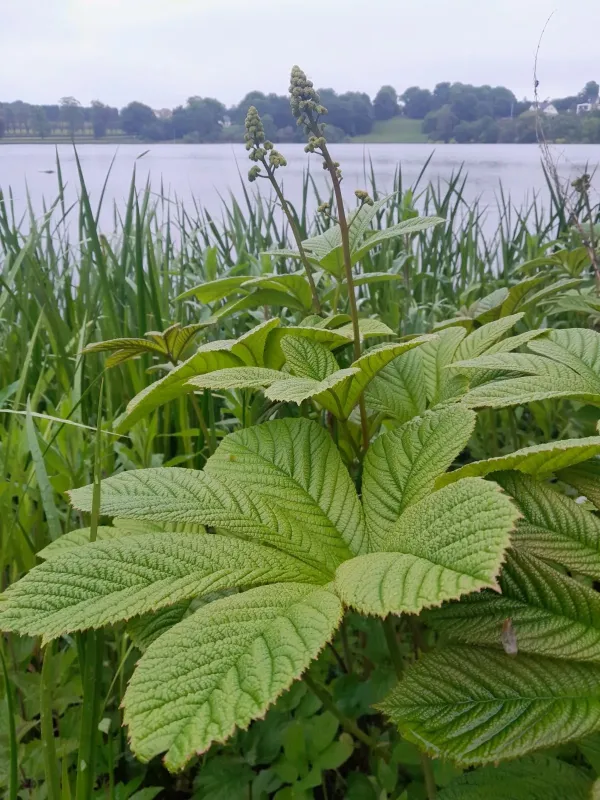
Description
Growing requirements
Featherleaf Rodgersia (Rodgersia pinnata) is a perennial herbaceous plant belonging to the Saxifragaceae family. Native to the mountainous regions of China, it thrives in shaded, moist environments typical of woodland settings.
The plant is highly valued for its large, pinnately compound leaves that provide a lush texture to garden landscapes. During mid-summer, it produces tall, impressive panicles of small, star-shaped flowers that bloom in shades ranging from creamy white to deep rose.
For successful cultivation, this plant requires a partial to full shade location. Intense direct sunlight should be avoided as it can cause significant leaf scorch, particularly in regions with hot, dry summers.
The soil must be rich in organic matter and consistently moist, with a slightly acidic to neutral pH level. Good drainage is essential, as stagnant water around the rhizomes can lead to root decay during the dormant season.
Standard care involves consistent mulching to maintain soil moisture and cool temperatures. Applying a balanced organic fertilizer in early spring supports vigorous foliage growth and ensures a spectacular floral display throughout the season.
Main diseases and pests
Slugs and snails are the most prominent pests for this species, often feeding on the succulent young foliage during the spring. Implementing barrier methods or using iron phosphate baits is recommended for effective management.
Fungal leaf spot diseases may occur if the foliage remains wet for extended periods or if air circulation is poor. Proper spacing during planting is a primary preventative measure to ensure adequate airflow between plants.
Aphids can occasionally cluster on the inflorescences, especially in dry weather. A light application of insecticidal soap is usually sufficient to address the issue without disrupting the local garden biodiversity.
Root rot, often caused by poor soil drainage combined with excessive winter moisture, is a significant threat to the plant's long-term health. Ensuring the site is well-drained before planting is crucial for disease prevention.
If nematode infestation is suspected, it is vital to quarantine the affected area and destroy the impacted rhizomes to prevent spread to other parts of the garden landscape.