
Rochelia disperma
Rochelia disperma
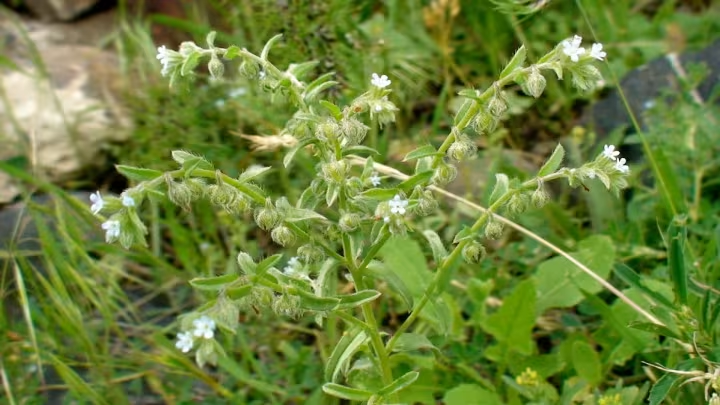
Description
Sowing dates
Rochelia disperma is an annual herbaceous plant belonging to the Boraginaceae family. In agricultural contexts, it is not considered a cultivated crop but is often identified as a field weed that interferes with standard farming operations.
The plant initiates its germination cycle in early spring when soil temperatures allow for active growth. Being an annual, it focuses its energy on rapid development to complete its life cycle before the dry heat of the summer season arrives.
Seedling emergence is highly dependent on environmental triggers, specifically soil moisture and light intensity. This allows the plant to emerge strategically, often outcompeting slow-growing crops during the early vegetation stage.
The biology of the plant is characterized by a quick transition from the vegetative stage to flowering. This timing is essential for its survival in the steppe environments where moisture availability becomes severely limited as the season progresses.
As an annual weed, it relies heavily on seed production for the continuation of the species. A single plant can produce a significant amount of seeds that remain viable in the soil for several years.
Growing requirements
Rochelia disperma is highly adapted to arid and semi-arid conditions. It prefers open areas with significant solar radiation, which is characteristic of the vast steppe regions where it is commonly found.
Regarding soil requirements, it thrives in well-drained, sandy, or stony substrates. It is not overly dependent on high soil fertility and can successfully establish itself on nutrient-poor or disturbed grounds where other plants struggle.
The climate requirement centers around a continental pattern with moderate spring temperatures. High heat tolerance is one of the plant's main survival strategies, allowing it to remain active while other species go dormant.
Moisture requirements are relatively low, as the plant is a xerophyte. It manages water efficiency through physiological adaptations that prevent excessive transpiration even during hot, windy days.
The plant does not tolerate deep shade, which is why it is predominantly restricted to open fields, roadsides, and non-forested agricultural borders. Constant exposure to light is a prerequisite for its normal generative development.
Main diseases and pests
In terms of threats to agriculture, Rochelia disperma acts as a competitive weed. By utilizing available nitrogen and soil moisture, it causes a reduction in the overall yield of cereal crops in infested fields.
While not a primary host for major agricultural epidemics, the plant can harbor various pathogens that may potentially spread to cultivated crops. This makes it a target for integrated pest management strategies.
Insects and generalist herbivores rarely consume the plant in quantities sufficient to curb its growth. The presence of chemical secondary compounds likely acts as a natural deterrent against many generalist pests.
The most significant threat to farm productivity is the dispersal of seeds. These seeds are adapted for hitchhiking on animals and machinery, leading to the rapid spread of the weed across agricultural sectors.
- Competition for essential soil nutrients.
- Contamination of harvested grain with weed seeds.
- Increased maintenance costs for herbicide application.