
Bloodberry
Rivina humilis L.
Description
Sowing dates
Rivina humilis L., commonly known as bloodberry or rouge plant, belongs to the Phytolaccaceae family. It is a perennial herb native to the tropical regions of the Americas.
Propagation is most commonly achieved through seeds. Sowing should be carried out in early spring to take advantage of the natural increase in day length and warmth.
Seeds are placed in a light, sterile seed-starting mix, ensuring the substrate remains consistently moist but not saturated to avoid seed rot before germination.
For successful germination, a consistent temperature range of 20 to 22 degrees Celsius is necessary. Covering the container with plastic can help maintain humidity.
Seedlings should be pricked out into individual pots once they reach the two-leaf stage. This allows for better root development and easier transplantation later on.
Growing requirements
This plant thrives in bright, indirect sunlight. Exposure to direct harsh sun during the summer months can lead to leaf scorching and overall plant stress.
Watering requirements are moderate; the soil surface should be allowed to dry slightly between waterings, but the root ball must never dry out completely.
A well-draining, nutrient-rich soil mix is vital. Using a substrate based on peat or coconut coir with added perlite ensures excellent aeration for the root system.
Humidity levels should be kept relatively high. Frequent misting of the foliage or using a humidity tray is recommended, especially during the dry winter heating season.
The plant prefers stable temperatures between 18 and 25 degrees Celsius. It should be kept away from cold drafts or proximity to air conditioning units.
Main diseases and pests
Spider mites are the most prevalent pest for Rivina humilis, particularly in warm and dry environments. Regular inspection of the leaves is crucial for early detection.
Mealybugs can often be found in the leaf axils or on stems. Removing them manually with a cotton swab dipped in rubbing alcohol is an effective non-chemical control.
Root rot, caused by overwatering or poor drainage, is the primary pathological threat. It usually manifests as yellowing leaves and wilting despite damp soil.
Fungal infections can sometimes affect the foliage if ventilation is poor. Improving air circulation around the plant helps prevent the spread of these pathogens.
Adhering to proper care practices is the best prevention strategy. Strong, healthy plants are significantly more resistant to common infestations and infections.
Harvesting
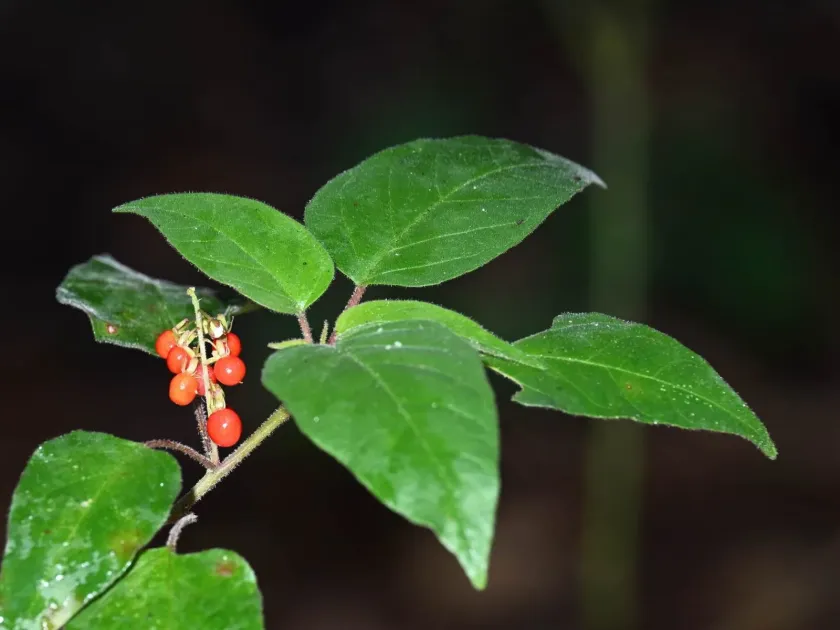
Rivina humilis is primarily grown as an ornamental plant due to its racemes of bright, glossy red berries that remain on the plant for extended periods.
In landscaping, it acts as an excellent ground cover in subtropical climates, often self-seeding to create lush, naturalized patches of foliage and berries.
Harvesting for seed production occurs after the berries are fully ripened. The seeds are extracted from the berries, cleaned, and dried for subsequent seasonal planting.
While the berries are visually appealing, they are considered inedible for humans. The plant tissues contain compounds that may be irritating if ingested in quantity.
Pruning is essential for maintaining a tidy, bushy form. By removing leggy stems, the grower can encourage the plant to produce more vigorous flowering and fruiting branches.