
Ristantia gouldii
Ristantia gouldii
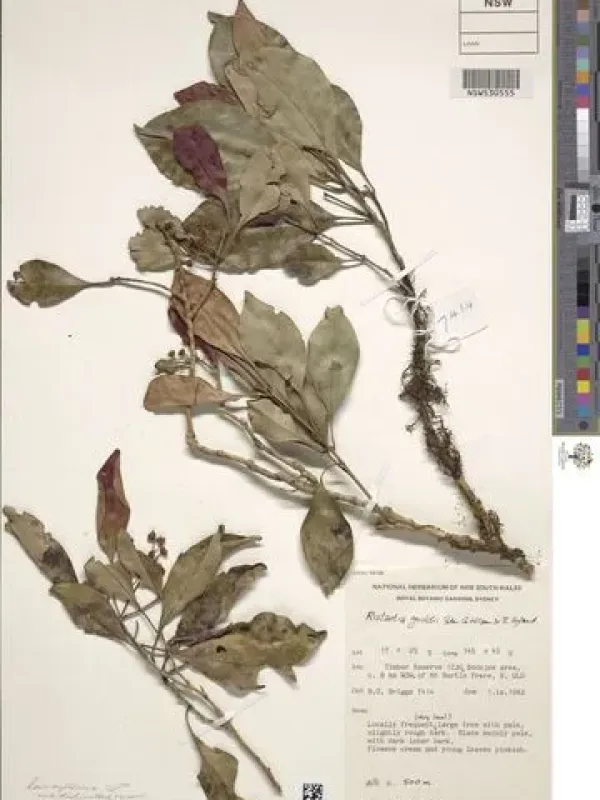
Description
Growing requirements
Ristantia gouldii is a distinct species belonging to the Myrtaceae family. Originally native to the rainforest regions of Queensland, Australia, this tree has gained interest as an ornamental and specialized crop in specific climatic zones.
The plant requires a strictly tropical or subtropical climate to flourish. It is intolerant of frost, necessitating greenhouse or controlled environment cultivation in temperate regions. High relative humidity is essential for maintaining leaf turgidity and preventing transpiration stress.
Soil requirements involve well-draining, nutrient-rich substrates with a slightly acidic profile. Achieving the correct balance of moisture retention and aeration is crucial; otherwise, the root system is highly susceptible to suffocation and decay.
Exposure to bright, indirect sunlight provides the best physiological performance for this species. When cultivated indoors, supplementing with full-spectrum horticultural lighting ensures that the plant maintains its structural integrity and leaf density.
Cultural management includes consistent irrigation with low-mineral water to avoid salt accumulation in the substrate. During the growing season, a balanced fertilizer application should be implemented to support steady vegetative growth and canopy development.
Main diseases and pests
Pest management is a fundamental aspect of maintaining Ristantia gouldii. Common threats include scale insects and mealybugs, which tend to congregate in leaf axils and along the stems, extracting vital plant sap and weakening the specimen.
Root pathogens represent the most significant threat to plant longevity. Species in the Myrtaceae family are particularly vulnerable to Phytophthora and other soil-borne oomycetes if irrigation schedules are not strictly regulated.
Cultural control measures are preferred over synthetic chemical applications. These measures include:
- ensuring adequate airflow
- maintaining strict hygiene around the root zone
- using sterilized propagation media
- avoiding foliage splashing during irrigation
Environmental stress, particularly sudden changes in temperature or light intensity, can predispose the plant to secondary infections. Maintaining environmental stability is the most effective proactive strategy for disease prevention.
Regular inspection schedules are recommended to identify early signs of nutrient deficiency or pest activity. Early detection allows for the application of targeted, low-impact control methods before the health of the plant becomes severely compromised.