
Rhynchoglossum gardneri
Rhynchoglossum gardneri
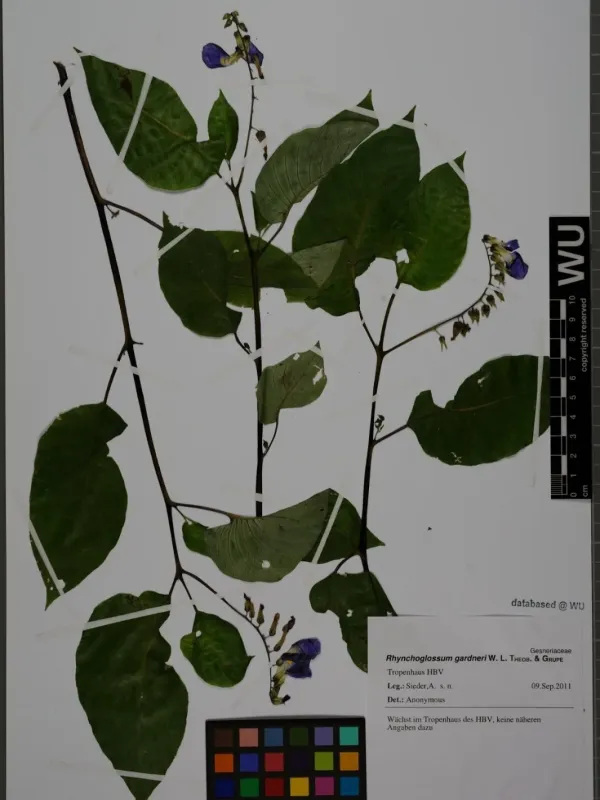
Description
Growing requirements
Rhynchoglossum gardneri is a member of the Gesneriaceae family, notable for its unique botanical structure. Native to the humid tropical regions of Asia, this plant requires specialized environmental conditions to thrive successfully.
The climate requirements emphasize a consistent, warm, and humid environment. It is crucial to maintain temperatures between 20°C and 26°C, as the plant is highly sensitive to cold drafts and rapid temperature fluctuations.
Soil quality is a fundamental aspect of its agronomy. The plant prefers a loose, well-draining substrate consisting of peat, leaf mold, and perlite, which ensures optimal root respiration while maintaining necessary moisture levels.
Light requirements are strict; the plant should be placed in partial or filtered shade. Direct sunlight is harmful and will quickly scorch the foliage, leading to dehydration and necrosis of the leaf margins.
Watering practices should focus on maintaining constant, moderate moisture in the substrate without reaching saturation. Using tepid, distilled, or rainwater is recommended to prevent mineral buildup and root stress.
Main diseases and pests
Typical threats include common greenhouse pests such as spider mites, which thrive in stagnant, dry air. Regular monitoring and misting help keep pest populations under control and maintain the health of the plant.
Fungal diseases like root rot and powdery mildew are the most prevalent issues in horticultural management. These are typically managed by improving air circulation around the plants and avoiding overhead irrigation during cooler periods.