
Rhodes grass
Chloris gayana Kunth
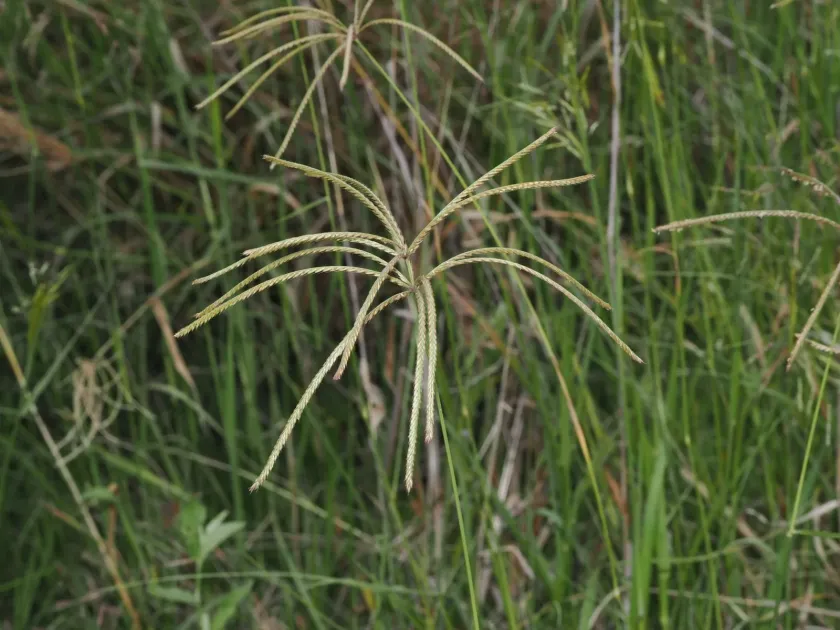
Description
Sowing dates
Rhodes grass (Chloris gayana) is a perennial tropical grass widely used for livestock forage. Planting is best performed when soil temperatures reach at least 18 degrees Celsius, ensuring rapid germination and successful establishment of the root system.
The seeds are very small, necessitating a shallow planting depth of no more than 1 centimeter. For optimal results, use a fine, firm seedbed and roll the soil after seeding to ensure adequate seed-to-soil contact, which is critical for moisture absorption.
The seeding rate typically ranges from 5 to 10 kilograms per hectare depending on the method of establishment. Because the seeds are small, they are often mixed with a carrier like sand or fertilizer to ensure an even distribution across the field during sowing.
During the early stages of growth, Rhodes grass requires careful weed management. Once the plants have established a solid ground cover, they are highly competitive and will effectively shade out most weeds, reducing the need for chemical intervention.
Rhodes grass can be established either through direct seeding or by utilizing stolons in humid environments. The chosen method depends on local climate conditions and available resources, but direct seeding remains the most common and efficient practice for large areas.
Growing requirements
One of the primary benefits of Rhodes grass is its remarkable adaptability. It thrives in a wide range of soil types, from sandy soils to heavy clays, and exhibits an impressive tolerance to salinity and alkaline conditions where other grasses fail.
As a heat-loving species, this grass performs best in full sunlight and warm temperatures between 25 and 35 degrees Celsius. It is highly sensitive to frost, which can kill the foliage and significantly reduce its productivity in cooler climates.
The grass is exceptionally drought-tolerant due to its deep and extensive root system. While it can handle short-term waterlogging or flooding, it prefers well-drained soils and does not thrive in areas with permanent water stagnation.
Rhodes grass is highly responsive to nitrogen fertilization, especially after cutting or heavy grazing. Regular fertilizer applications are essential to maintain high biomass production and protein content throughout the growing season.
Adequate sunlight is non-negotiable for this crop. Even moderate levels of shading can severely restrict growth and lead to thin, weak stands. Therefore, it should be grown in open, sun-exposed fields for the best possible outcomes.
Yield
Rhodes grass is renowned for its high yield potential. Under favorable conditions with adequate rainfall or irrigation, the crop can be harvested multiple times throughout the season, providing a steady supply of high-quality green forage for livestock.
The nutritional value is quite good, particularly in the vegetative stage, where the protein content is sufficient to support animal growth and milk production. It is highly palatable to cattle, sheep, and goats, making it a staple forage crop in many tropical regions.
The extensive root system improves soil structure and helps prevent soil erosion. Because it forms a dense sod, it is frequently used in conservation agriculture to stabilize land and increase organic matter content in the topsoil over time.
- High leaf-to-stem ratio enhances palatability.
- Excellent regrowth after intensive grazing.
- Good resistance to soil salinity.
Typical dry matter yields can range from 10 to 20 tons per hectare annually, depending on management intensity. Productivity usually peaks in the second or third year, after which the stand might require maintenance or rejuvenation through fertilization.
Main diseases and pests
Rhodes grass is relatively hardy but can be susceptible to fungal diseases such as leaf rust, especially in humid or high-rainfall environments. These pathogens can reduce the quality of the fodder and weaken the overall stand.
Various insect pests, such as grasshoppers and armyworms, can pose a threat, particularly in dry seasons when the green foliage of the grass attracts insects from surrounding arid areas. Early detection is key to preventing significant damage.
Some minor pests like cereal flies can cause localized damage to stems. Proper management practices, such as timely harvesting, help disrupt the life cycles of these insects and minimize their impact on the crop yield.
While the crop is vigorous, initial seedling growth is the most vulnerable phase. Protecting young stands from insect outbreaks and ensuring proper moisture is vital until the grass has formed a thick, robust canopy.
Generally, chemical controls are rarely needed if the stand is managed correctly through regular cutting or rotational grazing. Biological controls and maintaining a healthy plant population are usually sufficient to manage pest populations effectively.
Harvesting
Harvesting for hay should occur just before the flowering stage. At this point, the grass has the highest concentration of essential nutrients and protein. Delaying harvest leads to stem lignification, which reduces palatability and overall feed quality.
When grazing, rotational management is recommended to allow the plant enough time to recover. Leaving a stubble height of about 5–8 centimeters is ideal for rapid regrowth, as this ensures the remaining leaf base can capture sunlight.
For hay production, rapid drying in the sun is crucial to lock in quality. Proper moisture content for storage is generally around 12–14 percent to prevent mold and spoilage while keeping the nutritional value intact during long-term storage.
Seed harvesting requires precision timing as the seeds are small and prone to shattering. The harvest is typically done via direct combining when the seed heads turn brown and before widespread seed dispersal occurs.
Post-harvest, seeds must be cleaned and dried immediately to maintain viability. Storing seed in a cool, dry place ensures high germination rates for the following season's planting, contributing to a sustainable cycle of Rhodes grass production.