
Red mangrove
Rhizophora mangle L.
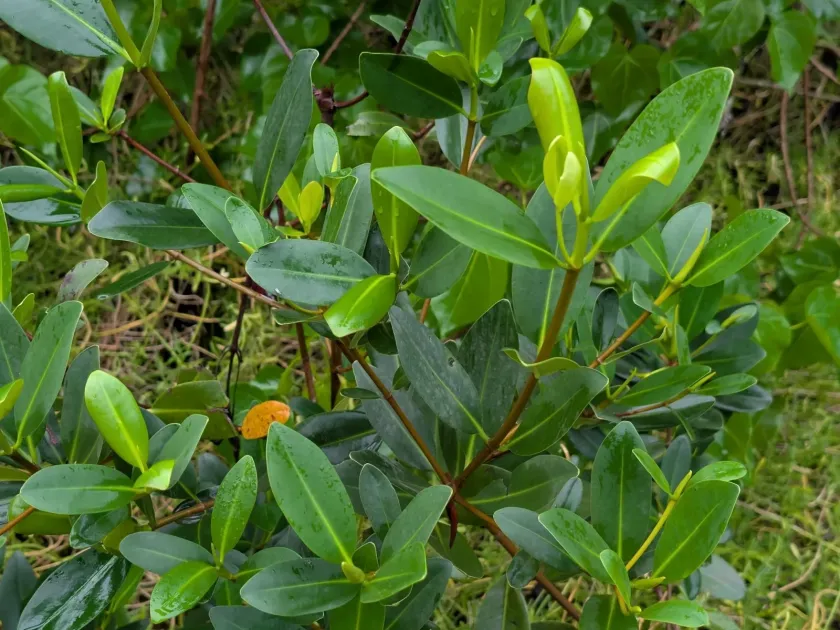
Description
Growing requirements
Rhizophora mangle, commonly known as the red mangrove, belongs to the Rhizophoraceae family. It is a salt-tolerant tree species adapted to tropical and subtropical intertidal environments.
Its natural range encompasses the coasts of the Atlantic Ocean, including the Gulf of Mexico, the Caribbean, and the tropical coastlines of West Africa.
Botanically, it is distinguished by its complex prop root system, which anchors the tree in loose, waterlogged sediments and assists in oxygen absorption.
The tree requires a warm climate, consistent inundation by brackish or salt water, and nutrient-rich, fine-grained soil to thrive in its natural habitat.
Cultivation protocols for restoration involve selecting appropriate tidal levels to ensure the seedlings receive the correct balance of moisture and air.
Yield
The economic utility of the red mangrove centers on its role in coastal stabilization and supporting commercial fisheries by providing essential nursery habitats.
Its wood is exceptionally hard and durable, historically utilized for pilings, charcoal production, and high-quality timber in coastal communities.
The bark of the red mangrove contains high concentrations of tannins, traditionally harvested for the commercial tanning and curing of leather products.
The primary yield in ecological projects is the stabilization of sediment and the prevention of erosion along vulnerable tropical coastlines.
Managed mangroves provide sustainable resources for local communities, including honey production from nectar and non-timber forest products.
Main diseases and pests
Pests such as the mangrove moth larvae can cause significant damage to the apical buds of young saplings, impeding growth.
Root rot pathogens, particularly in areas with poor tidal circulation, can compromise the structural integrity of the prop root system.
Oil spills and industrial run-off pose catastrophic threats, clogging the lenticels on the roots and suffocating the trees.
Coastal development and land-use changes often destroy natural habitats, preventing the mangrove from migrating landward in response to sea-level rise.
Severe hurricanes and tropical storms can cause massive physical damage, uprooting stands and displacing large quantities of sediment.
Harvesting
The harvest of propagules occurs when the mature seedlings naturally detach from the parent tree, indicating they are ready for dispersal.
Red mangroves exhibit vivipary, where the seeds germinate and develop into elongated propagules while still attached to the branches.
For restoration efforts, technicians collect these propagules and plant them in designated areas, ensuring they are positioned correctly in the sediment.
The success of the planting process depends on the timing, often aligned with tidal cycles to maximize initial survival and root engagement.
Sustainable wood harvest requires selective pruning methods that preserve the overall health and reproductive capacity of the mangrove forest.