
Rhabdothamnus solandri
Rhabdothamnus solandri
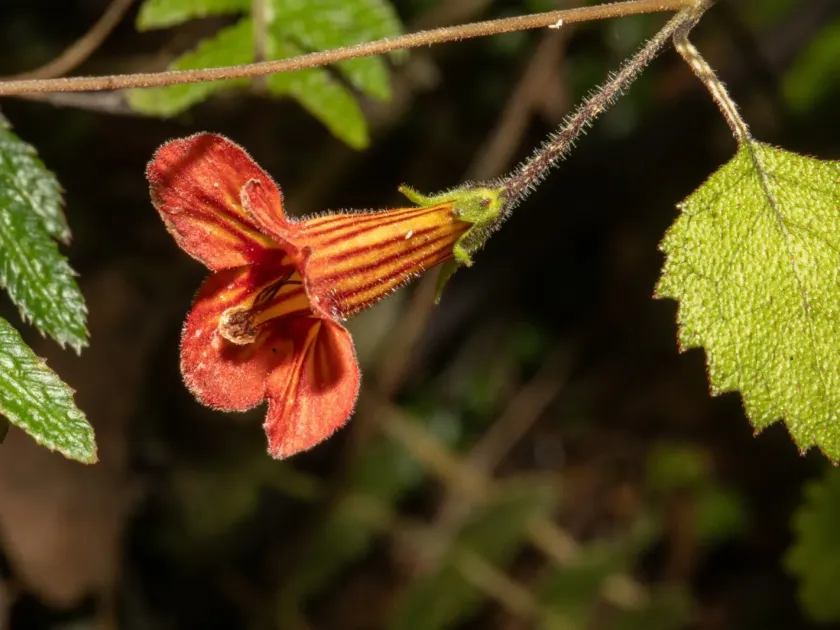
Description
Growing requirements
Rhabdothamnus solandri is a unique member of the Gesneriaceae family, notable for being the only woody shrub species within this family endemic to New Zealand.
In its natural habitat, the plant is typically found in the North Island, thriving in shaded forest margins, along stream banks, and on rocky, sheltered hillsides.
The culture requires specific environmental conditions, primarily a loose, well-draining soil rich in organic matter to ensure root health and prevent waterlogging.
For successful development, it requires a stable level of humidity and temperate conditions, as the species is highly sensitive to extreme temperatures and direct, harsh sunlight.
Proper agronomic management in a controlled environment involves consistent watering with soft water and protection against drying winds which can damage its delicate foliage.
Harvesting
Rhabdothamnus solandri is primarily valued for its high ornamental potential, serving as a rare and sophisticated addition to private and botanical collections.
The plant exhibits a long flowering period, spanning from spring through late autumn, which makes it a highly desirable feature for landscape design in mild climates.
Pollination in the wild is traditionally facilitated by specific native honeyeaters, a biological factor that must be considered when attempting to propagate the plant by seed.
Its хозяйственное use remains largely restricted to niche ornamental horticulture rather than large-scale agricultural or industrial production.
Propagation is most effective through cuttings, as growing from seeds is technically complex due to specific requirements for stratification and specialized growing media.