
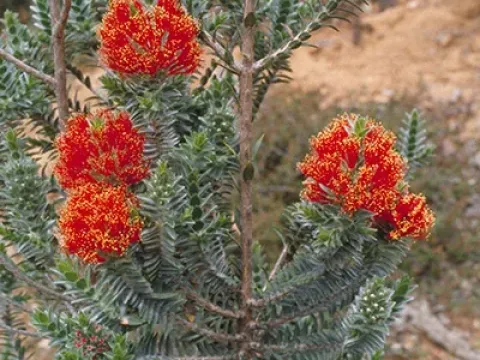
Regelia
Regelia
Regelia is a genus of evergreen shrubs belonging to the Myrtaceae family. Native to Western Australia, these plants are highly valued for their unique, brush-like flower clusters that exhibit striking colors and textures typical of the region's flora.
What the section contains

Regelia
Cultivation of Regelia requires strict adherence to soil moisture conditions. These plants thrive in well-draining, sandy, or stony substrates. In cultivation, they are usually grown in containers or specially prepared garden beds to ensure optimal aeration.
Sunlight exposure is a critical factor for successful growth. Regelia plants perform best in full sun, where the intensity of light promotes healthy vegetative development and enhances the blooming cycle of the shrubs throughout the season.
The climate requirements reflect the plant's Mediterranean-like native environment. They prefer warm, dry conditions and are generally intolerant of frost. Protecting the plants from extreme cold is essential for their long-term survival in cooler climates.
The primary use of this culture is ornamental. Regelia is often chosen by landscape designers to provide an exotic look to arid-style gardens. Its ability to attract local biodiversity also makes it a valuable plant for ecological garden projects.
Root rot, often caused by species of Phytophthora, is the most significant threat to Regelia. This condition occurs when the soil remains too wet for extended periods, suffocating the roots and allowing pathogens to take hold in the tissue.
Aphids are common pests that attack the tender new growth of the shrubs. Their feeding behavior results in stunted leaves and can sometimes facilitate the spread of viral or fungal infections throughout the plant canopy.
Scale insects represent another challenge, as they attach themselves to the stems and leaves, extracting vital nutrients. Infested plants show signs of yellowing and overall decline if the pests are not managed early.
Spider mites thrive in environments with low humidity, often appearing in greenhouses or during dry summers. Regular inspection and maintaining appropriate environmental hygiene are necessary to keep their populations under control.
Managing these threats requires a proactive approach. Using well-draining potting media, providing adequate spacing for airflow, and using targeted horticultural soaps or systemic pesticides when necessary will ensure the health of the collection.