
Rapistrum perenne
Rapistrum perenne
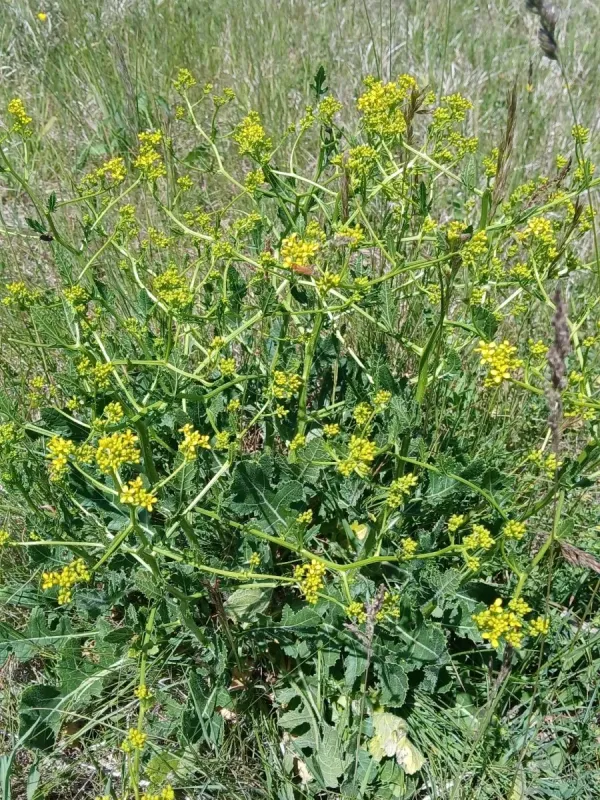
Description
Sowing dates
Rapistrum perenne, a perennial member of the Brassicaceae family, is a hardy plant with significant potential for various agricultural applications.
The sowing season typically begins in early spring, once the soil has warmed sufficiently to ensure rapid germination of the seeds.
Optimal planting depth is crucial; burying seeds at approximately 1.5 to 2 centimeters ensures both sufficient moisture and adequate light access.
Seedlings exhibit vigorous growth, allowing the crop to establish itself quickly and effectively outcompete weeds in the early stages of development.
In regions with mild winters, autumn sowing can also be considered to allow for an earlier start to the growth cycle in the following season.
Growing requirements
This crop thrives in open, sun-drenched locations, as shading significantly restricts its stem development and overall biomass accumulation.
It adapts well to a variety of soil types but demonstrates peak performance on loamy and sandy soils that offer good aeration and neutral pH levels.
Rapistrum perenne is remarkably drought-tolerant, utilizing a deep root system to access water reserves that are unreachable by many other shallow-rooted crops.
Effective drainage is essential, as the plant is highly susceptible to root damage in waterlogged or overly compacted soil conditions.
While hardy, the plant benefits from a consistent climate, though its innate resilience allows it to withstand significant temperature fluctuations common in continental zones.
Yield
The primary use of this crop is the production of green forage, which is highly valued for its protein content and balanced mineral profile.
In the flowering stage, the plant reaches its maximum nutritional capacity, making it an excellent candidate for silage or haylage production.
Expected yields range between 150 and 250 decitonnes per hectare, depending largely on fertilization practices and seasonal rainfall distribution.
Beyond its forage value, Rapistrum perenne serves as a valuable nectar source for bees, extending the foraging season with its prolonged blooming period.
High seed viability and production rates make it an economically sustainable choice for farmers looking to diversify their agricultural output.
Main diseases and pests
Flea beetles are the most frequent threat, capable of causing devastating damage to emerging seedlings if left uncontrolled in the early spring.
The cabbage moth and various sawfly species pose significant risks to foliage integrity throughout the active summer growth season.
Powdery mildew represents a common fungal threat, particularly in humid or overcrowded conditions that restrict air circulation within the canopy.
Alternative fungal pathogens, including downy mildew, may also impact plant health, requiring proactive management through crop rotation and sanitation.
Integrated pest management strategies are recommended to maintain plant health while reducing the dependency on intensive chemical treatments.
Harvesting
Harvesting for green forage is ideally timed during the peak flowering phase to ensure the optimal balance of fiber and nutritional quality.
Seed harvesting requires careful timing, targeting the window after the pods have matured but before they naturally dehisce to scatter seeds.
Modern harvesting machinery can be calibrated to capture the crop efficiently, minimizing physical loss and ensuring clean biomass collection.
Post-harvest handling is critical, emphasizing rapid drying to reach moisture levels suitable for long-term storage and preservation of quality.
Storing the yield in a well-ventilated area prevents degradation and maintains the high nutritional value of the harvested plant material.