
Flamevine
Pyrostegia venusta
Description
Growing requirements
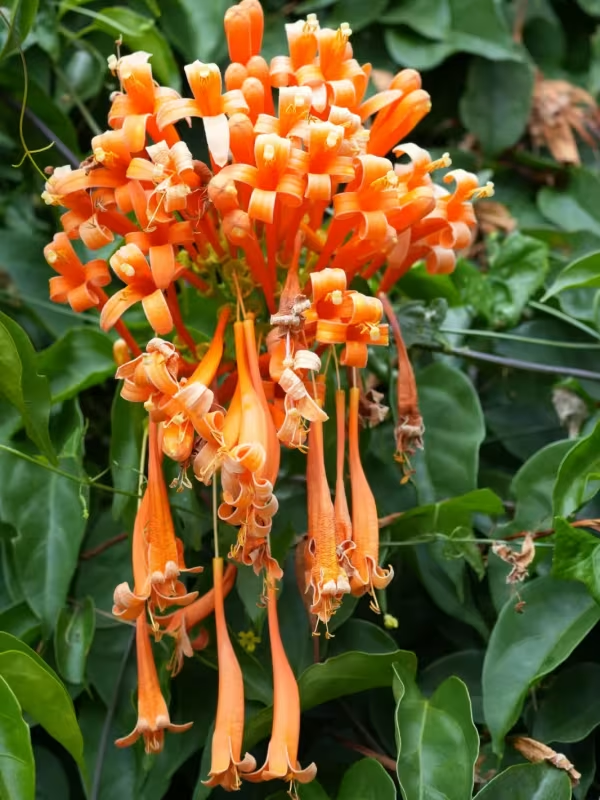
Pyrostegia venusta, commonly known as Flamevine, belongs to the Bignoniaceae family. Originating from Brazil, it is a vigorous, evergreen woody climber widely appreciated for its brilliant, tubular, orange flowers that cover the plant during the flowering season.
The plant thrives in full sun, which is crucial for its energy production and flower bud formation. It prefers well-draining, nutrient-rich soils with a slightly acidic to neutral pH, which supports robust stem and leaf development.
Regarding climatic requirements, the Flamevine is essentially a tropical plant. It requires warm temperatures throughout the year and is highly sensitive to frost. In temperate regions, it is cultivated in greenhouses or as a seasonal ornamental plant.
Cultivation practices involve providing sturdy trellises or fences for the vine to climb, as its tendrils are designed for vertical growth. During the growing season, moderate fertilization is recommended to promote the development of its lush foliage and vibrant blooms.
Watering should be consistent but cautious; while the plant enjoys moisture, it cannot tolerate waterlogged soils, which may cause root distress. Pruning after the flowering period helps to maintain the desired shape and encourages denser branching.
Main diseases and pests
Common pests that may infest Flamevine include spider mites and scale insects, especially when the plant is kept in indoor environments with low humidity. Regular inspection of the undersides of the leaves can lead to early detection.
Fungal issues, such as root rot, are typically the result of poor soil drainage or overwatering. To mitigate this risk, it is essential to ensure that the potting media provides enough aeration for the root system to breathe.
Powdery mildew can occasionally appear on the leaves during periods of high humidity and poor air circulation. Applying neem oil or specific fungicides can effectively manage these infections if they are identified early.
Nutrient deficiencies, specifically nitrogen or iron, can cause yellowing of the foliage. Balanced, water-soluble fertilizers are effective in correcting these conditions and ensuring the continued health of the plant.
The most effective strategy against pests and diseases in Pyrostegia venusta is to maintain optimal growing conditions. A healthy, well-ventilated plant with appropriate light levels rarely suffers from severe infestations.