
Pyramimonas tetrarhynchus
Pyramimonas tetrarhynchus
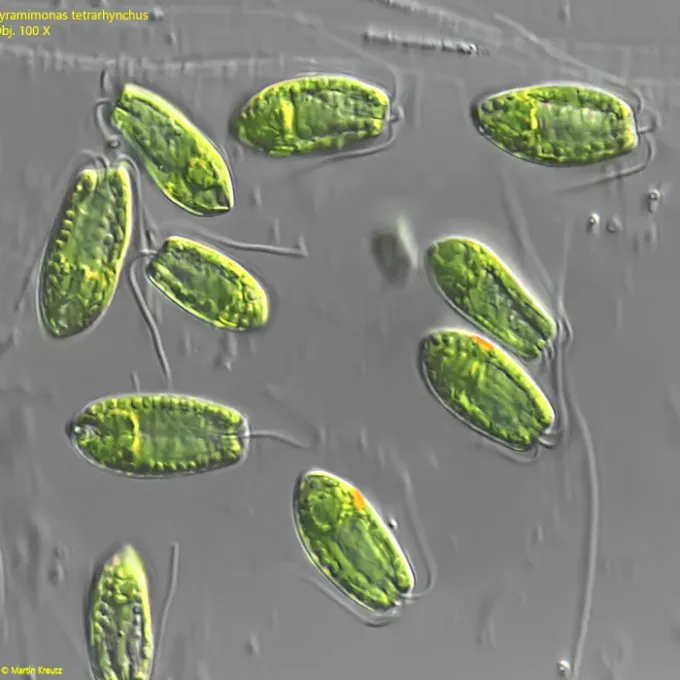
Description
Sowing dates
The cultivation of Pyramimonas tetrarhynchus begins with the inoculation of sterile culture media with a high-quality starter culture.
Precise density management of the initial inoculum is essential to ensure a rapid transition into the exponential phase of cell growth.
Regular subculturing is mandatory to maintain the genetic integrity and physiological activity of the algae strain over time.
The light-to-dark cycle must be carefully controlled, as photoperiodic responses significantly influence the metabolic rate of this species.
Automated dosing systems are often employed to maintain optimal cell concentration throughout the various stages of the scaling process.
Growing requirements
Pyramimonas tetrarhynchus is a flagellated unicellular green alga belonging to the Pyramimonadaceae family, widely studied for its unique cellular structure.
Optimal growth conditions include a water temperature ranging from 18 to 24 degrees Celsius, which supports peak biological performance.
Sufficient light intensity, provided by specialized LED panels, is necessary to support efficient photosynthesis and biomass accumulation.
The medium must be enriched with balanced nutrients, including nitrates and phosphates, along with essential vitamins for optimal survival.
Continuous agitation or aeration is required to facilitate gas exchange, particularly the diffusion of carbon dioxide into the culture media.
Yield
Productivity is measured by the concentration of dry biomass achieved under standardized light and temperature conditions in a bioreactor.
High yields depend on the specific growth rate, which can be optimized through the careful manipulation of the culture's nutritional profile.
Harvesting strategies are planned based on the growth cycle to ensure that the biomass is collected at the peak of its metabolic productivity.
Consistent environmental monitoring allows for precise yield prediction and helps in adjusting the growth parameters during the production cycle.
Successful management of light and nutrient supply is the primary factor in achieving consistent and high-quality industrial output.
Main diseases and pests
Contamination by pathogenic bacteria and invasive protozoa remains the most significant threat to the health of the Pyramimonas population.
Excessive temperature fluctuations can cause cell lysis and degrade the structural integrity of the flagellated organisms within the system.
Virulent viral strains pose a risk of rapid population collapse, requiring strict biosecurity protocols in any commercial facility.
Improper lighting conditions trigger cellular stress, which reduces the organism's ability to resist secondary infections or chemical imbalances.
Environmental toxins, even at low concentrations, can disrupt growth and compromise the quality of the harvested biological material.
Harvesting
The harvesting process generally involves centrifugation, which is highly effective at separating the small cells from the liquid medium.
Filtration through fine-mesh membranes is another common method used to concentrate the algae biomass for further processing.
Post-harvest procedures include washing the biomass to remove salts and residual nutrients to ensure purity for pharmaceutical or nutritional use.
Preservation techniques, such as flash freezing or spray drying, are essential for maintaining the biochemical stability of the harvested cells.
Final quality control steps involve verifying the biochemical composition of the product to ensure it meets established industry standards.