
Narrowleaf mountain mint
Pycnanthemum tenuifolium
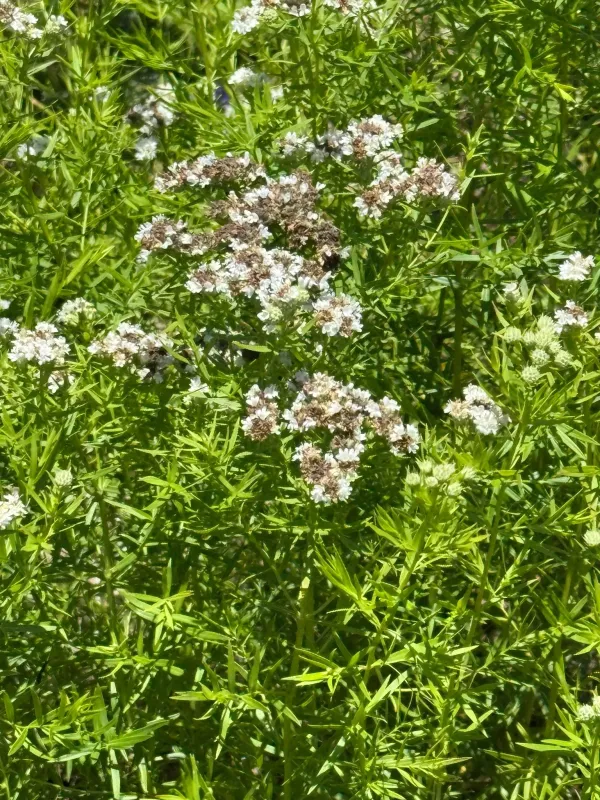
Description
Sowing dates
Narrowleaf mountain mint (Pycnanthemum tenuifolium) is a perennial herb belonging to the Lamiaceae family. It is increasingly recognized in sustainable agriculture for its aromatic properties and value as a pollinator-friendly crop.
Seeds are typically sown in early spring in well-prepared soil. Due to their small size, they should be barely covered with soil, as they require light to initiate germination efficiently.
In commercial settings, seeds are often started in trays to ensure a higher survival rate before transplanting to the field. This method also allows for better weed control during the seedling stage.
Spacing is a crucial factor in the development of this crop. A distance of 40–50 cm between rows and 20–30 cm between plants allows for adequate development of the root systems.
The plant is known for its hardiness and ability to establish itself in various soil conditions, making it a reliable perennial option for long-term production cycles.
Growing requirements
This species thrives in full sun, which is essential for maximizing the production of essential oils. While it can tolerate partial shade, productivity and flavor profile are optimal under bright sunlight.
The soil should be well-drained and neutral to slightly acidic in pH. It grows naturally in prairies and dry woodlands, meaning it has adapted to tolerate periods of moisture fluctuation.
Watering requirements are moderate. Once the root system is established, the plant demonstrates significant drought tolerance, reducing the need for intensive irrigation compared to other herbs.
Soil amendments like compost or balanced fertilizers are recommended before planting to provide sufficient nutrients for the initial vegetative growth phase.
Crop rotation and field preparation are essential to manage weed pressure, as the plant can be slow to establish from seeds in competition with invasive grasses.
Yield
Yields peak in the second and third years as the plant clusters expand. The harvested biomass is primarily used for the extraction of volatile oils and as a dried herb component.
As a notable honey plant, the economic value of the crop is dual: it serves both as an essential oil source and as a support for apiculture, increasing overall farm profitability.
Main diseases and pests
The plant is relatively resistant to major pests due to the high concentration of essential oils in its foliage. This makes it an ideal candidate for organic farming practices.
Root rot remains the most significant threat if the soil remains waterlogged for prolonged periods. Maintaining proper drainage and preventing over-irrigation are the primary preventive measures.
Harvesting
Harvesting is performed during the peak blooming period, typically in mid-to-late summer. Cutting the stems about 10–15 cm from the ground promotes secondary growth.
Post-harvest handling involves drying the material in a cool, dark, and well-ventilated area to preserve the integrity of the essential oils for commercial use.