
Putoria calabrica
Putoria calabrica
Description
Sowing dates
Propagation of Putoria calabrica is typically achieved through seeds or semi-hardwood cuttings collected during the active growth phase in late spring.
Seeds require a cold stratification period to break dormancy, after which they should be sown in a well-draining, grit-based seeding mix.
Sowing in containers is preferred to allow better control over moisture levels, as the seedlings are highly susceptible to dampening off in their early stages.
Cuttings should be placed in a humid environment, such as a cold frame, to facilitate rooting while maintaining moderate temperatures throughout the day.
Transplanting to the final site should be done carefully to avoid disturbing the sensitive root system, ensuring the plant is established before the winter dormant season.
Growing requirements
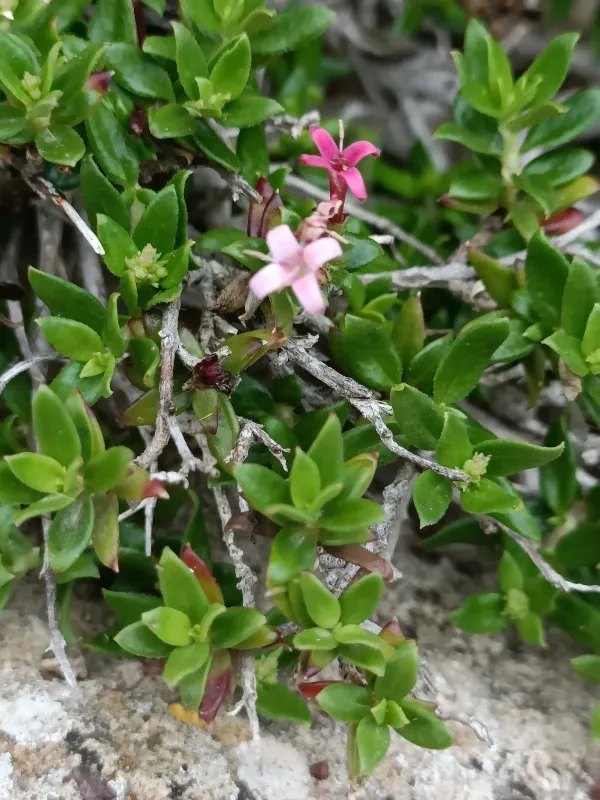
Putoria calabrica is a low-growing evergreen shrub belonging to the Rubiaceae family, characterized by its prostrate habit and aromatic foliage.
This species thrives in Mediterranean climates and is specifically adapted to rocky outcrops, limestone cliffs, and steep slopes where water drainage is rapid.
The plant requires full sun exposure to maintain its compact shape and to encourage the development of its distinctive small, tubular flowers.
Soil requirements include excellent aeration and a mineral-rich composition, often benefiting from the inclusion of crushed limestone or volcanic grit.
It is not frost-hardy in severe northern climates and should be protected during winter to prevent desiccation and freezing damage to the evergreen stems.
Main diseases and pests
Fungal pathogens associated with excessive soil moisture are the most significant threat to the health and longevity of Putoria calabrica specimens.
Root rot often develops rapidly if the plant is subjected to stagnant water, leading to the gradual browning and eventual death of the entire shrub.
Insect pests such as aphids may occasionally colonize the soft tips of new growth, causing curling leaves and potential secondary viral infections.
Prevention is the best strategy for managing threats, which involves keeping the root neck dry and ensuring optimal air movement around the foliage.
Regular monitoring for symptoms of leaf spot or wilting is advised, especially during seasons with unusually high humidity or frequent rainfall.