
Puccinellia tenuiflora
Puccinellia tenuiflora
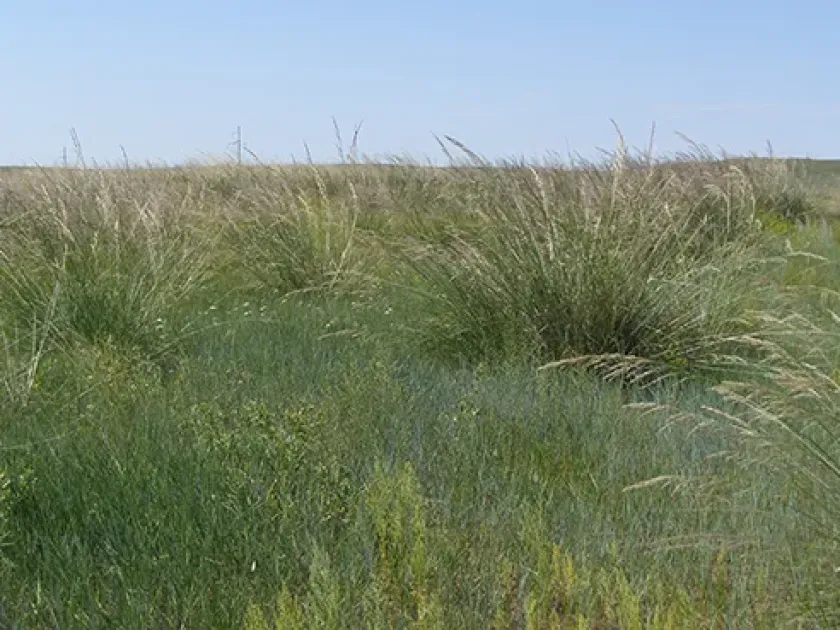
Description
Growing requirements
Puccinellia tenuiflora, commonly known as alkali grass, is a perennial plant belonging to the Poaceae family. It is a highly specialized halophyte, naturally adapted to environments where high soil salinity prevents the growth of most conventional agricultural crops.
The plant originates from the arid and semi-arid regions of Asia, including territories in China, Mongolia, and Russia. It has evolved in environments characterized by harsh winters, hot summers, and high concentration of salts in the soil profile.
Puccinellia tenuiflora thrives in moist, saline conditions, such as the edges of salt lakes and saline meadows. It is highly valued for its ability to withstand osmotic stress and periods of temporary waterlogging, which are typical for its native habitat.
The cultivation of this grass does not require intensive soil preparation. Its high adaptability makes it an ideal candidate for restoring degraded saline soils, where its dense root system plays a crucial role in soil stabilization and structure improvement.
Optimal growth is achieved when the soil maintains a degree of moisture, allowing the plant to absorb necessary nutrients despite the saline environment. Nitrogen fertilization can enhance biomass production during the early growth stages.
Yield
The primary use of Puccinellia tenuiflora is in forage production on marginal lands. It provides a reliable source of green fodder for livestock, especially in areas where other forage crops fail due to soil salinity.
Yield capacity is directly influenced by the level of soil salinity and the availability of water throughout the growing season. In optimal conditions, it provides high-quality pasture that livestock graze readily without any negative impacts.
The grass is known for its excellent regrowth ability after grazing, making it suitable for rotational grazing systems. It maintains nutritional quality even in late stages of development, providing a consistent food source for herds.
It can also be harvested as hay to supplement winter feeding programs. While the biomass yield per hectare is moderate, the economic value lies in utilizing previously unproductive salt-affected areas for agricultural output.
Recent research efforts are focused on the seed production of this species. Increasing seed yields is essential for the broad-scale application of Puccinellia tenuiflora in large-scale land reclamation and pasture improvement projects.
Main diseases and pests
Puccinellia tenuiflora exhibits natural resistance to many common cereal diseases. Its unique physiological adaptation to saline environments provides a natural defense barrier against many pathogens that typically infect agricultural grasses.
The main challenge during the establishment phase is competition from weeds. Since the seedlings develop slowly, weed management is essential during the first season to ensure the grass becomes sufficiently established to form a dense stand.
Insect pests are generally not a major concern; however, monitoring during the flowering stage is recommended to protect seed production from potential damage by insects that might target the developing reproductive parts.
Improper grazing management is a significant threat to the longevity of the pasture. Overgrazing can weaken the plant and lead to a reduction in its density, which may allow for invasive weeds to colonize the open patches.
Environmental management, including the prevention of excessive water stagnation, is necessary to keep the plants healthy. Despite its affinity for moisture, the soil should have adequate drainage to prevent physiological stress during the vegetative phase.