
Pterodiscus ruspolii
Pterodiscus ruspolii
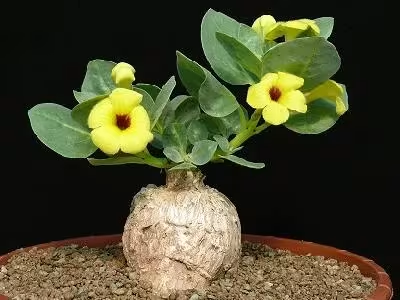
Description
Sowing dates
Sowing seeds of Pterodiscus ruspolii in controlled environments requires maintaining a stable high temperature, ideally between 25 and 30 degrees Celsius. For seed germination, a light, well-draining substrate is necessary to prevent moisture stagnation near the root collar.
The optimal time for sowing is during the spring when daylight hours begin to increase, which positively affects the growth rate of young seedlings. Seeds should be sown at a shallow depth, ensuring uniform soil moisture using a spray bottle.
An important condition during the sowing stage is providing bright but indirect lighting to prevent the seedlings from stretching. Direct sunlight during this period can cause burns to the delicate tissues of young plants, so the use of shading nets is mandatory.
Pterodiscus ruspolii sprouts are sensitive to sharp fluctuations in night and day temperatures, so it is essential to provide a stable thermal regime. The germination period can vary from two to four weeks depending on seed freshness and adherence to agronomic standards.
After the first pair of true leaves appears, the plants are pricked out into individual containers. This stage is critical as it allows for the formation of a primary root system that is resistant to the future arid climate conditions typical of the species' natural habitat.
Growing requirements
Pterodiscus ruspolii, a member of the Pedaliaceae family, is a typical succulent adapted to life in conditions of limited moisture. The crop has strict requirements for soil aeration: the substrate must contain a high percentage of coarse sand or perlite.
For normal development, the plant requires intense sunlight, imitating the conditions of open savannas in East Africa. If lighting is insufficient, the plant's stem becomes deformed, losing its natural decorative and biological characteristics.
The culture reacts extremely negatively to excessive soil moisture, which leads to caudex rot. The watering regime must be strictly measured: during the active growing phase, watering should only be carried out after the soil ball has completely dried out.
The temperature range for successful cultivation is between 20 and 35 degrees Celsius. In the winter period, the plant requires a distinct dormant phase with a temperature drop to 15 degrees and almost complete cessation of watering to prevent shoot elongation.
Soil acidity should be neutral or slightly alkaline, which corresponds to the natural habitats of this species in Ethiopia and Somalia. Excess nitrogen fertilizers in feed mixtures are not recommended, as this reduces the resistance of caudex forms to environmental stress factors.
Main diseases and pests
The main danger to Pterodiscus ruspolii is fungal diseases of the root system, which occur as a result of waterlogging and poor substrate drainage. Soft rot infection of the caudex often becomes fatal for the plant due to the specifics of its physiology.
Among pests, the spider mite causes the most damage, actively multiplying in low air humidity in indoor conditions. Its activity leads to yellowing and premature leaf drop, which significantly weakens the crop's immunity.
Mealybugs are also frequent visitors to the aerial parts of the plant, sucking cell sap from leaf axils. Systemic insecticides are used for control, but due to the sensitivity of the succulent epidermis, oil-based preparations should be avoided.
The root mealybug poses a hidden threat, as pest colonies develop inside the root ball, remaining invisible in the early stages. Prophylaxis involves the use of sterilized substrate and regular inspection of the root system during repotting.
Preventive measures include maintaining good ventilation in the growing area, which reduces the risk of fungal spore spread and pest infestations. It is important to avoid dense plantings that contribute to creating a microclimate with high humidity, which is favorable for pathogens.