
Blue Sandalwood Tree
Pteroceltis tatarinowii
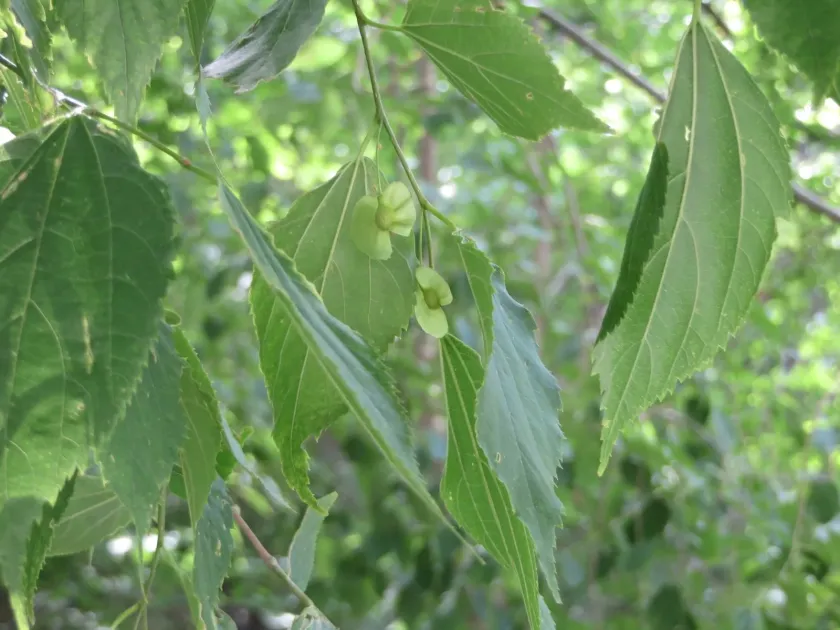
Description
Sowing dates
Propagation is primarily achieved through seeds, which require a stratification period of several weeks in cold, moist conditions to break dormancy.
Sowing in nursery beds should be carried out in early spring when the substrate temperature remains consistently above the freezing point.
The seeds are placed at a depth of 2–3 cm in a well-draining, nutrient-rich potting medium to ensure uniform germination across the bed.
Seedlings must be monitored closely for moisture levels and provided with shade screens to prevent desiccation during the first growing season.
Transplanting into the permanent field site is best performed during the dormant phase in late autumn or early spring to minimize root disturbance.
Growing requirements
Pteroceltis tatarinowii, a member of the Cannabaceae family, is a deciduous tree native to the limestone regions and river valleys of Eastern China.
The species thrives in deep, fertile soils and shows a preference for sites with high moisture availability but excellent drainage to prevent root rot.
It is moderately shade-tolerant during the juvenile stage but requires full sun exposure to reach its maximum growth potential in maturity.
The ideal climate for this species includes mild to warm temperatures with adequate seasonal rainfall, as it is not highly drought-tolerant.
Soil management should include maintaining a near-neutral pH and adding organic matter to sustain the vigorous growth required for timber production.
Yield
The primary economic value of the tree lies in its bark, which contains long, strong fibers essential for the production of the renowned Xuan paper.
This paper is highly prized in traditional Asian arts, including calligraphy and ink wash painting, due to its durability and archival quality.
Sustainable harvesting of the bark involves careful thinning of stands to ensure that the trees remain healthy while providing a consistent yield.
The timber of the species is characterized by its density, hardness, and resistance to decay, making it suitable for furniture and construction.
Mature plantations yield a significant volume of raw material after a growth cycle of 15 to 20 years, contributing to local forestry economies.
Main diseases and pests
The species is generally robust but can be susceptible to various fungal pathogens that cause leaf spot during periods of high humidity.
Insects like scale insects and certain leaf-eating beetles may infest the canopy, necessitating regular monitoring and integrated pest management.
Improving air circulation through proper spacing of trees is a key strategy for mitigating the impact of fungal diseases within a plantation.
Vigilance is required to prevent bark damage, as physical wounds can leave the tree vulnerable to secondary bacterial infections and wood-boring insects.
Integrated cultural practices, including timely pruning and debris removal, are essential for maintaining the overall health and vitality of the orchard.