
Sneezewood
Ptaeroxylon obliquum
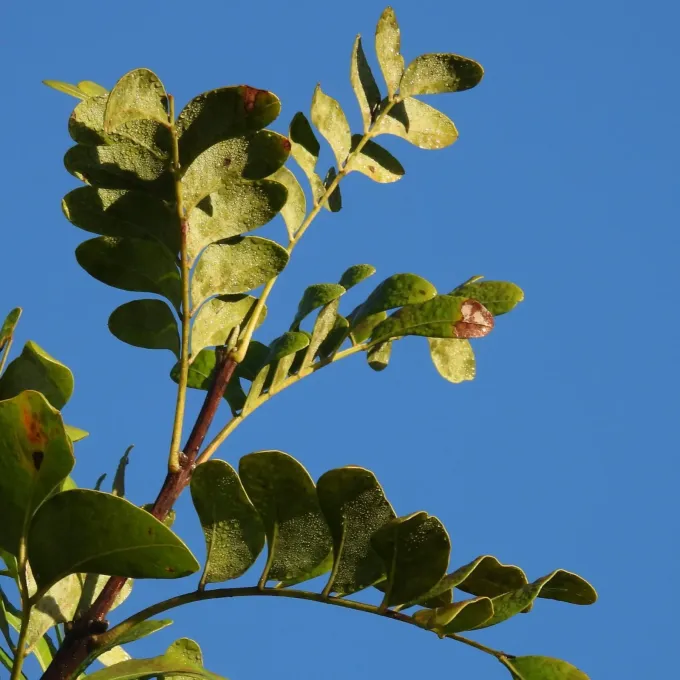
Description
Growing requirements
Sneezewood, scientifically known as Ptaeroxylon obliquum, belongs to the family Ptaeroxylaceae. It is a slow-growing, deciduous tree native to the diverse landscapes of Southern and Eastern Africa, thriving in a variety of bushveld and forest environments.
The species has specific soil requirements, preferring well-drained, fertile substrates that prevent waterlogging. In terms of climate, it is highly adapted to subtropical regions with distinct wet and dry seasons, showing resilience to heat.
Sunlight exposure is a crucial factor for the healthy development of Sneezewood. As a light-demanding species, it performs best when planted in open areas where it can receive direct solar radiation for the majority of the day.
Agronomic management involves periodic thinning to reduce competition, especially in the early stages of establishment. This ensures that the main trunk grows straight and develops the dense wood structure the species is famous for.
Plantation design should account for the tree's natural growth habit, allowing sufficient space between saplings. Proper spacing helps maintain airflow and reduces the micro-climatic humidity that can lead to fungal infections.
Yield
The timber of Sneezewood is highly prized in the furniture industry due to its extreme durability and resistance to decay and insect damage. The wood has a fine texture, a deep golden color, and a pleasant, distinct aroma.
Apart from high-quality timber, the tree has traditional medicinal uses. The bark is traditionally ground into a fine powder, which acts as a potent sternutatory, a property that gave the tree its common English name, "Sneezewood."
Sustainable harvesting is essential for the economic viability of the species. Since it is slow-growing, forestry experts recommend long-term planning and strict adherence to regeneration guidelines in plantation sites.
The tree also holds significant value in ornamental gardening and urban landscaping. Its graceful foliage and attractive, small flowers make it a favorite for parks and private gardens in climate-appropriate regions.
Overall economic yield is measured not only by lumber volume but also by the long-term environmental contribution of these trees in stabilizing soils and supporting local biodiversity in their natural range.
Main diseases and pests
The primary threats to Ptaeroxylon obliquum in forestry include wood-boring insects that target the trunk, potentially degrading the quality of the commercial timber. Regular monitoring is vital to mitigate such infestations.
Fungal root diseases are a major concern in areas where drainage is poorly managed. Excessive moisture in the rhizosphere is a leading cause of plant mortality, necessitating careful site selection and soil management.
Herbivory by wild game and livestock can severely impact young saplings. Protective measures, such as installing fencing around new plantings, are standard practice to ensure survival during the critical early years of growth.
Climate change poses a long-term risk, particularly regarding the alteration of natural rainfall patterns in its native habitat. This can stress trees and make them more susceptible to opportunistic diseases and pests.
To preserve the species, it is crucial to implement integrated pest management (IPM) strategies. This involves a combination of mechanical, biological, and, if necessary, chemical controls to protect the timber quality and tree health.