
Smoke tree
Psorothamnus spinosus
Description
Growing requirements
Psorothamnus spinosus, commonly known as the smoke tree, is a perennial shrub belonging to the Fabaceae family. Native to the Sonoran and Colorado deserts, it is exceptionally adapted to arid environments characterized by extreme heat and prolonged dry spells.
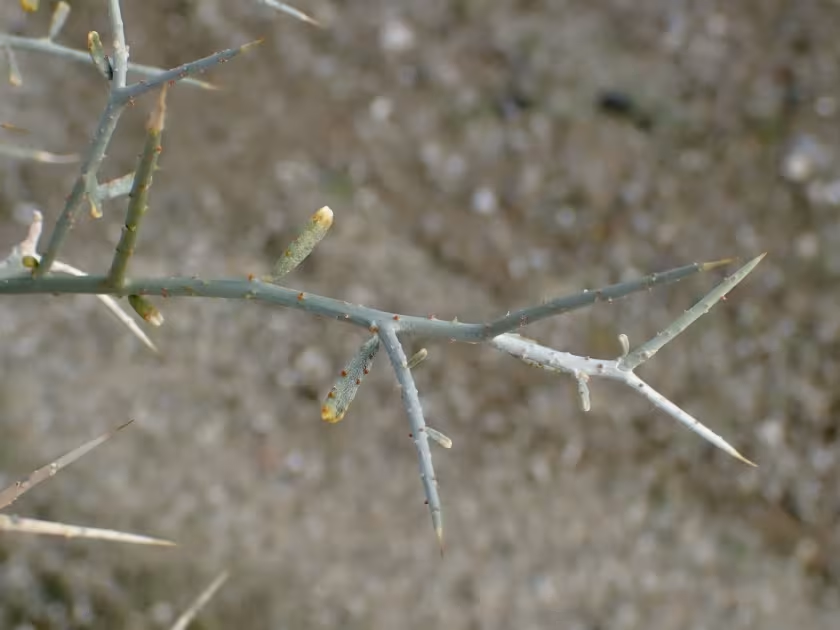
The plant is anatomically specialized for desert survival. It features a system of spines that minimizes the surface area for evaporation, allowing the shrub to retain moisture while shedding leaves during the most intense drought periods.
Regarding soil requirements, the smoke tree demands excellent drainage. It thrives in sandy, rocky, or gravelly soils where water does not pool, as moisture stagnation is the primary cause of plant death in cultivation.
Sunlight is a non-negotiable requirement for this species. It must be planted in full-sun locations to ensure the development of its characteristic silvery-blue foliage and to facilitate the nitrogen fixation process associated with its root system.
Economically, this species is highly valued for desert land reclamation and erosion control. Its ability to thrive in nutrient-poor soils while fixing atmospheric nitrogen makes it a cornerstone species for environmental restoration projects in arid zones.
Main diseases and pests
The most significant threat to the smoke tree is root rot, which occurs almost exclusively under improper irrigation management. Overwatering and poor soil aeration are the main factors leading to pathological decline.
Pests such as seed weevils can affect the quality of the seed pods. If commercial seed production is intended, protective measures during the pod development stage are necessary to ensure high yield and viability.
While the plant is generally resistant to local diseases, high humidity levels can occasionally promote the growth of fungal pathogens on the stems. Good air circulation is essential to mitigate this risk.
Environmental stress caused by extreme humidity changes may leave the plant vulnerable to opportunistic pathogens. Monitoring the plant’s vigor during transitional weather is advised.
Effective disease prevention relies primarily on mimicking natural desert conditions. By maintaining a dry root zone and providing ample solar exposure, the plant’s natural immune system remains robust.